



I was in Brussels on November 22, 2011, to give a talk at TEDx Brussels at the Bozar building in Brussels.
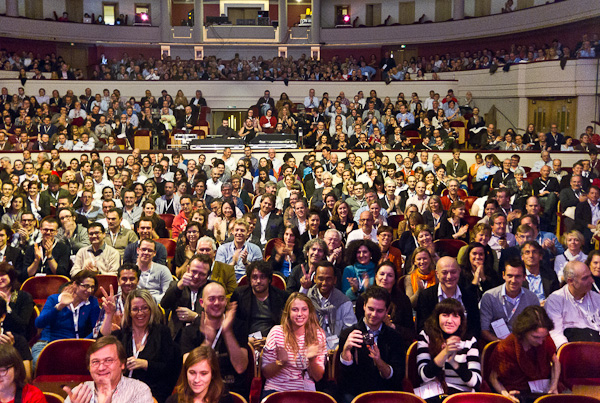
Here’s a photo I took of the audience after the talk.
A video of my talk went online as of November 24, 2011. And I’ve embedded the video here.
***
The rest of this post consists of the slides and the outline of the fifteen-minute talk.

In this talk I speculate about the year 3000. A thousand years from now.
I first came to Brussels here in 2000 to do some research for my novel about Peter Bruegel’s life, As Above So Below: A Novel of Peter Bruegel. And in 2002, I was here as a guest of the Royal Flemish Academy of Belgium for Science and the Arts.
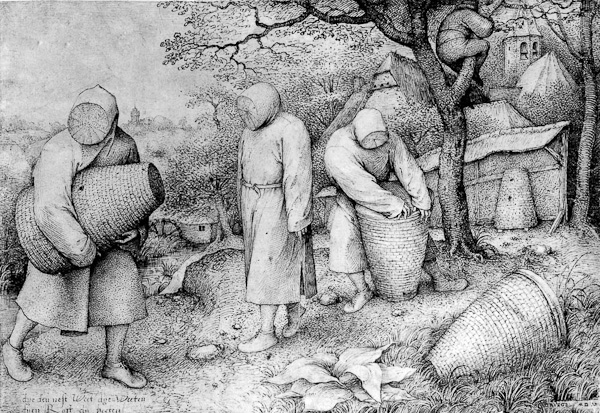
The picture shown above is called The Beekeepers. It’s disturbing and surreal. Bruegel drew this image in 1568, shortly after the patriots, the Count of Egmont and the Count of Hoorne were beheaded at behest of the Spanish Inquisition. My sense is that those straw hives represent the baskets into which Count Egmont’s and Count Hoorne’s heads dropped after being lopped off by the executioner’s sword in the Grand Place.
The image has some relevance to my talk, as a human head, is after all, a rather compact and intense information storage device, and I’ll be discussing the notion of a “lifebox” model of a human personality.
.jpg)
I got a Ph. D. in mathematics, and I’ve published popular science books about infinity and about the fourth dimension. I spent about twenty years as a computer science professor at San Jose State. And over the last ten years I’ve become something of a painter—and you’ll see some of my pictures here. But the the main thing I do is to to write science fiction novels. By now I’ve published twenty of them.
In 1982, I published my early cyberpunk novel, Software. The book introduced a theme I’ve been thinking about for my whole career. Is it possible to copy a person’s personality and essence into another medium? In Software, my notion was that some helpful robots were copying people’s brains by slicing them up—extracting the human software. And the software was being put onto robot bodies. That woman on the cover is an android, you understand. Software and three follow-up novels are available now as the Ware Tetralogy.
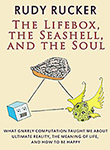
I do see this as being something that will happen in the next thousand years. In the very near term, we already have a simple way for mimicking the process, something that I call lifebox software. The idea behind a lifebox is get a large and rich data base with a person’s writings, videos of them, interviews, and so on. That’s the back end. The front end of a lifebox is an interactive search engine. This will be a huge commercial business soon. I’ve even made a preliminary attempt at a Rudy’s lifebox.
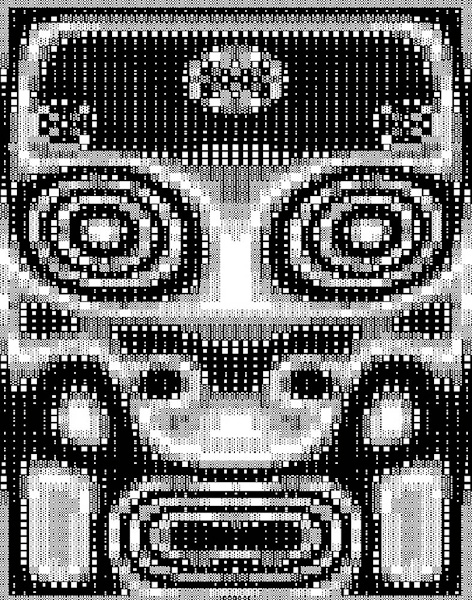
Back in the mid 1980s, I became fascinated with a new style of parallel programs called cellular automata or CAs. I learned about them from Stephen Wolfram. I was interested in his remarks that some cellular automata are universal computers.
I wrote this early CA in assembly language, and the display is made of ASCII characters. I call this particular CA Maxine Headroom after the then-popular animatronic TV character Max Headroom. You can get this program as part of the free Cellab software online.
Although I was getting my novels published I wasn’t earning enough money to support myself, my wife and our three children. I decided to get into computer science. Even though my Ph. D. was in mathematical logic, in 1986 I was able to get a job as a computer science professor at San Jose State University in California.
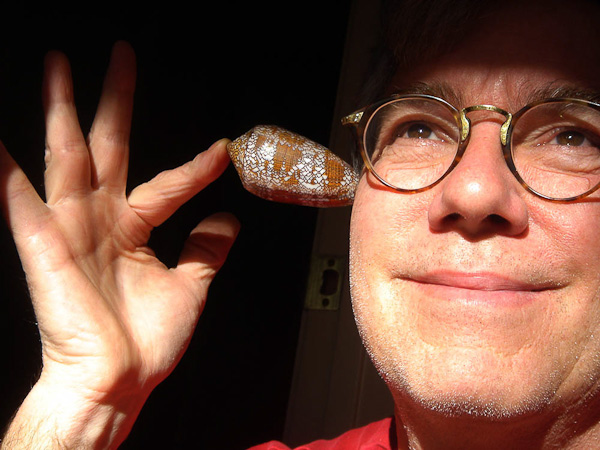
In principle any universal computer can emulate a human mind. And many natural systems behave like cellular automata. So I began wondering if there might be some way to have natural objects become programmable in an easy way.
Above is an image of me clowning with a South Pacific cone shell. The cone shells are beloved by fans of cellular automata, as it’s widely believed that the shells’ patterns are generated by a biological process very similar to a cellular automaton. Here I’m imagining that the cone shell will somehow connect to my brain.
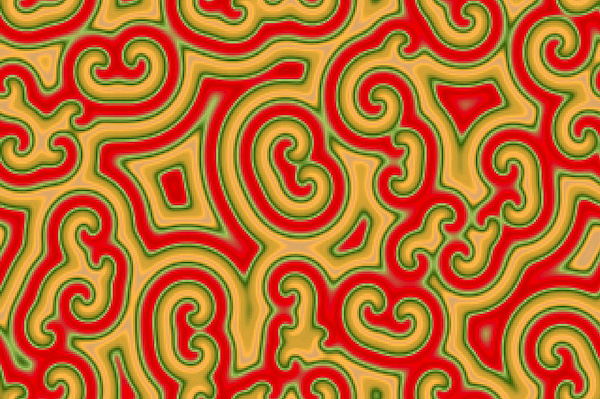
In the years to come, I got ever more involved involved with CAs. The way they work is that, in a CA, you can think of the onscreen pixel as being a little computer, with all of them updating in parallel. One trick that I liked to use continuous values for the states of these pixels or cells, see my free software CAPOW, available online.
Perhaps my favorite CAs are the ones that spontaneously take on the appearance of ever-turning nested scrolls. These guys are called Belousov-Zhabotinsky scrolls, They’re are common in physics—as patterns of turbulent wakes. And they’re ubiquitous in biology—you find Zhabotinsky scrolls in mushroom caps, shells, beans and fetuses. Some have argued that everything in the world is a CA.
I spent hundreds and hundreds of hours staring at CAs. I was always looking for the gnarly ones, that is the CAs whose pattern is nicely positioned between order and randomness. I like using the more California word “gnarly” instead of “complex” or “chaotic.”
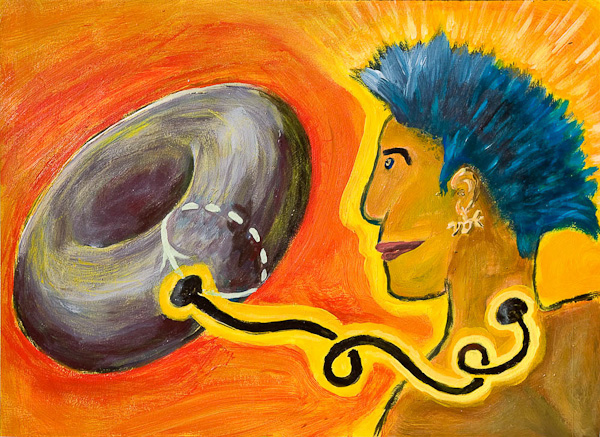
Working as a programmer, I learned the frustration of working with the brittle computing machines. If you omit a semi-colon in a novel, the novel doesn’t disappear—as can happen with a program.
Thinking as a science-fiction writer, I liked to imagine having a completely smooth interface between myself and the outer world—which I’ve painted as a torus here. I was still thinking in terms of a cable into my spine at this point. You can see all of my paintings online.
Where will end up in a century or two will be a device that sits on the back of your neck and communicates with other people via their devices. I call these things uvvies in my science fiction novels.
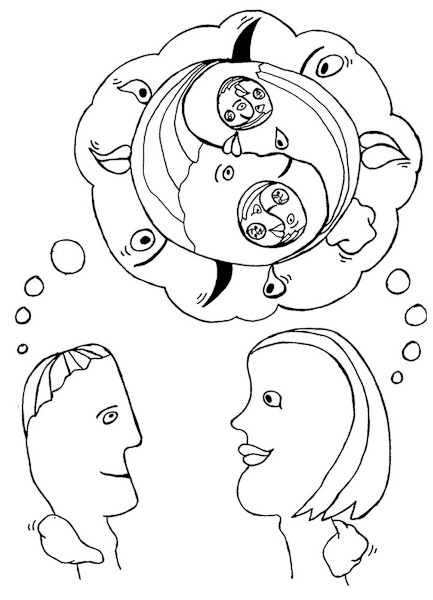
An uvvy link is very close to telepathy. I think we’ll get true telepathy when, instead of sending information to someone else, you simply send them a link to the location where that information is stored in your own brain. And they can access it there without copying it. Relative to you, other people are part of your data cloud.
This picture shows a pathological regress you might encounter with telepathy. Like pointing a video camera at its output screen. An infinite regress. But there’s nothing really wrong with that kind of experience. It might even be fun. This drawing and the ones to follow are taking from my novel, Saucer Wisdom.
At this point I was getting more and more interested in biocomputation. I think an uvvy might well be a biotech device—probably you want anything that interfaces that closely with your body to be alive.
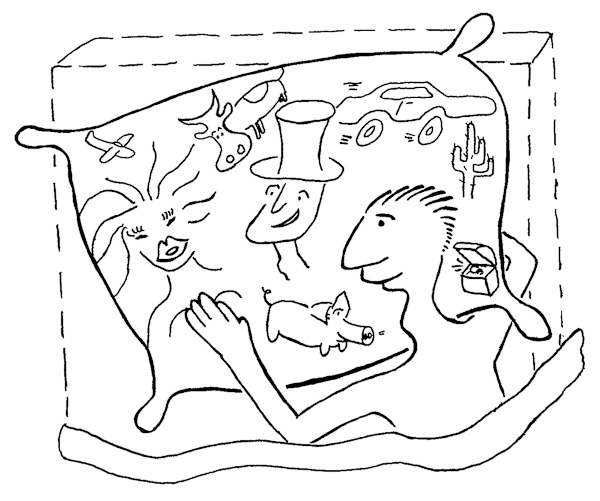
A much easier biocomputation app we’re likely to see is a substance similar to the skin of a cuttlefish. Call it squidskin for short. We’ll be using squidskin as an inexpensive all-purpose display. This guy has a squidskin pillow so he can look at nice things in bed.
I like to use the word wetware when talking about hacking genomics. I’m taking wetware to mean the genomic information that generates a living organism. An acorn is the wetware for an oak tree, an egg is the wetware for a chicken, a person’s wetware is their DNA.
I don’t see nanotech as a separate discipline. It’s really about learning to work with the biotech already present in nature. To become a wetware engineer.
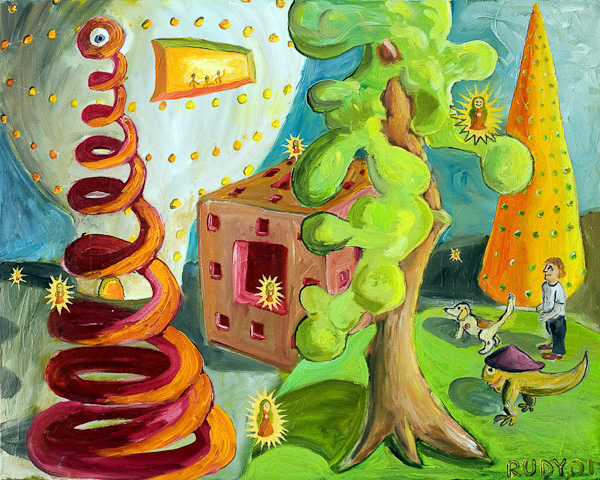
Looking towards the year 3000, I expect that we will have gotten very good at wetware engineering. This painting show a future city in which all of the buildings—except for that tree in front—have been grown.
Note also the Bosch-style little man in the lower corner. And the floating little figures might be taking the place of surveillance cameras. For some reason each of them shaped like the Virgin Mary. This painting was made for my novel Frek and the Elixir, which is set in the year 3003.
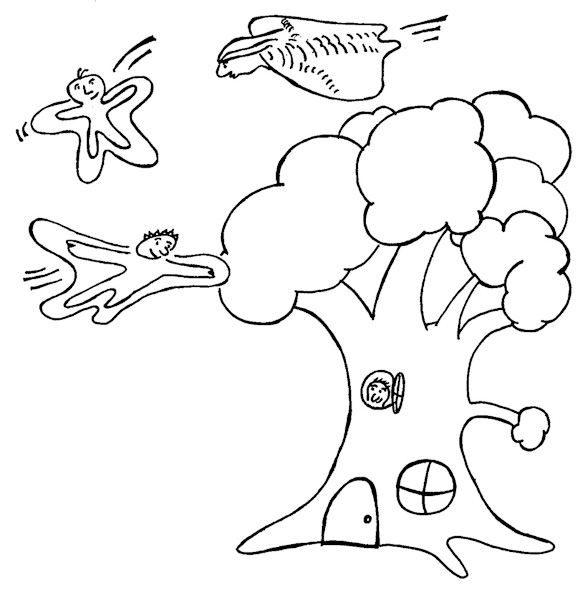
Naturally we’d like to grow our own houses. I think of a seed about the size of a pizza, and you shove it in the ground. I like the idea of a family living inside a kind of oak tree with squidskin on the inner walls.
I see the tree as being powered off photosynthesis. It has toilets in the walls that feed into the tree’s metabolism. It extracts metal from the ground and grows an electrical circuit, in case we’re still using electricity. The internal plumbing system extracts water from a tap-root that grows down to the water table.
The people have symbiotic wings they can strap on. I know there’s an energy problem in human flight—we’ll assume the wings are powered with, let us say, dark matter.
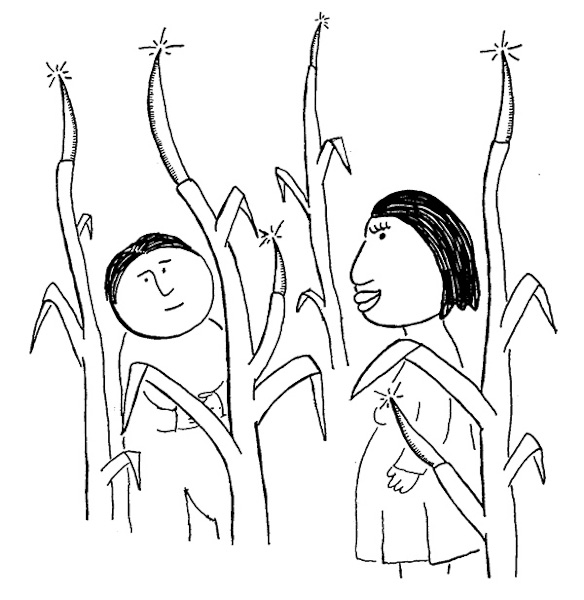
We can expect wetware engineered plants to grow any kinds of objects that we need. Here you see a plant like a corn stalk, except it extracts iron from the soil and forms a knife at its tip. A stub of the stalk makes a nice handle.
In the early 2000s, I became interested in the notion of moving beyond biocomputation as well If we take seriously the notion of quantum computation, anything at all can be a computer.
The notion that I’m leading up to is hylozoism. This is a real word, you can find it in Wikipedia. I got so enamored of this word that I even wrote a novel called Hylozoic, in which everything is alive—even the rocks.
A stone is, after all, like a jiggling mass of a septillion atoms, connected by spring-like bonds. There’s a lot happening inside a rock. Why shouldn’t it be as intelligent as I am?
In a hylozoic society of the year 3000, we don’t use manufactured tools anymore.
Instead we directly program the material objects around us. Every object is filled with quantum wave functions. Every object is programmable. Every object is alive. You only have to tell it what to do.
And how do you talk to the objects? Via our uvvies—that is, via something like telepathy.
Here’s a matching pair of images—just for fun.
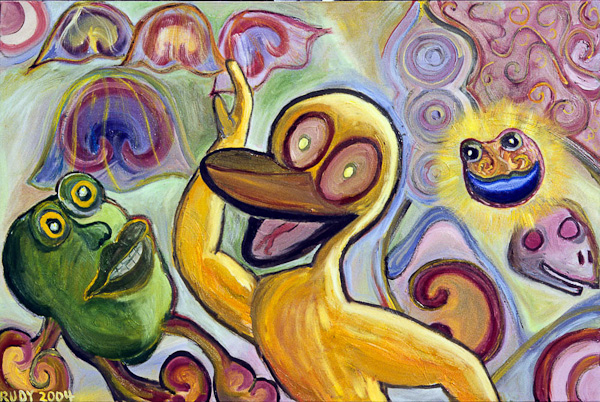
This painting shows a weird scene in our biocomputational future. Think of it as a year 3000 disco.
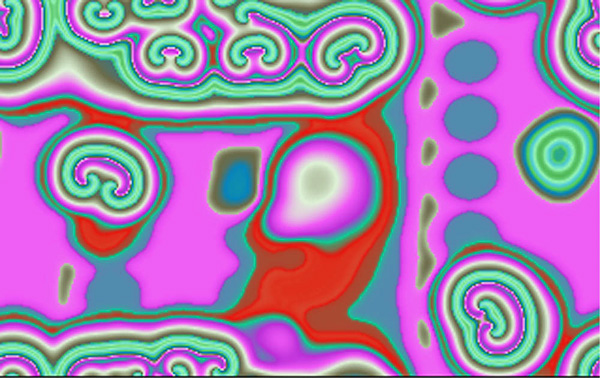
And here’s a pattern of cellular automata that underlies the year 3000 disco. This is what our world is like a smooth field of quantum computation. That’s all that’s there. And we only interpret the patterns as being things like green potatoes and dancing ducks?
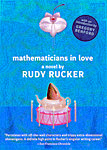
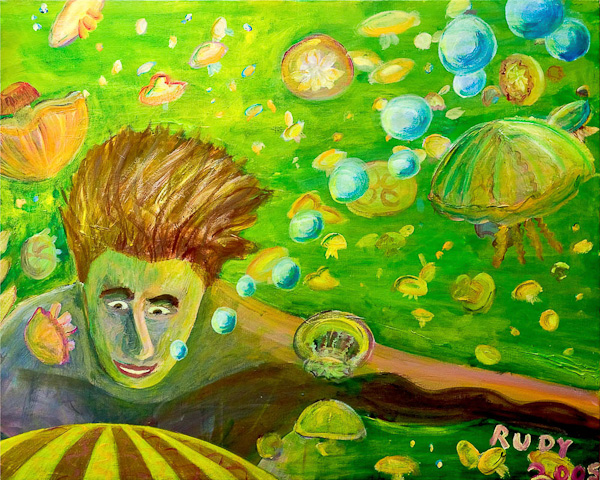
And after the year 3000? Perhaps we leave our bodies and turn into light. Or maybe into subdimensional jellyfish, as I discuss in my novel Mathematicians in Love.
I’ll see you there!