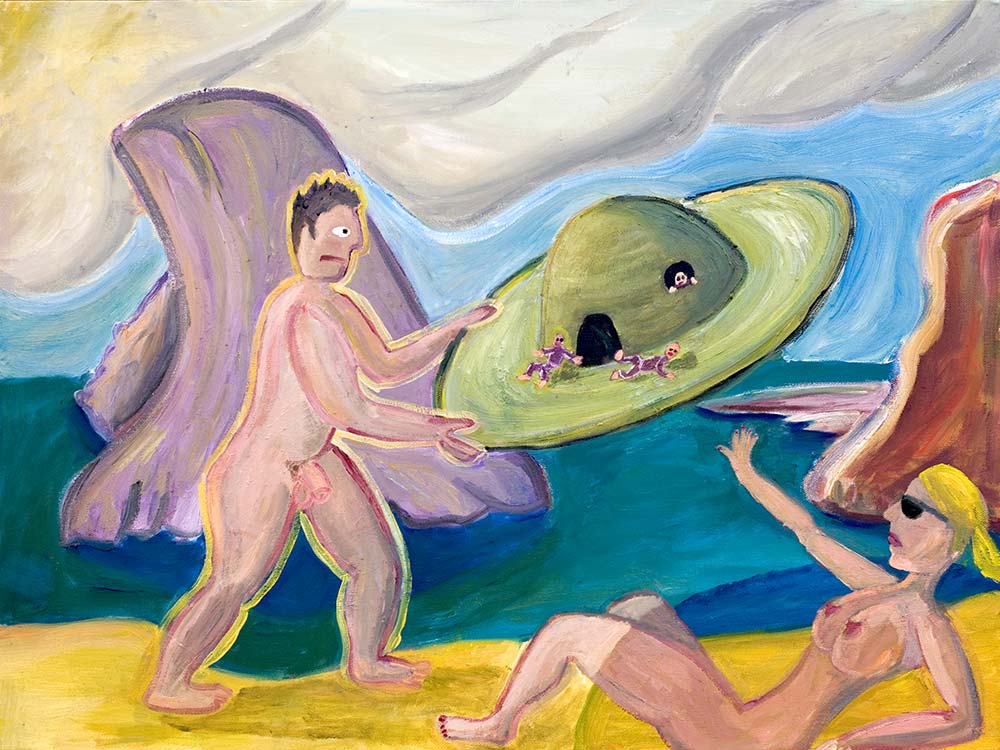
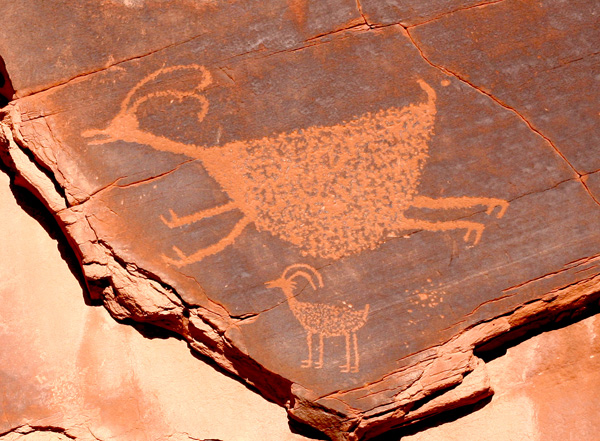
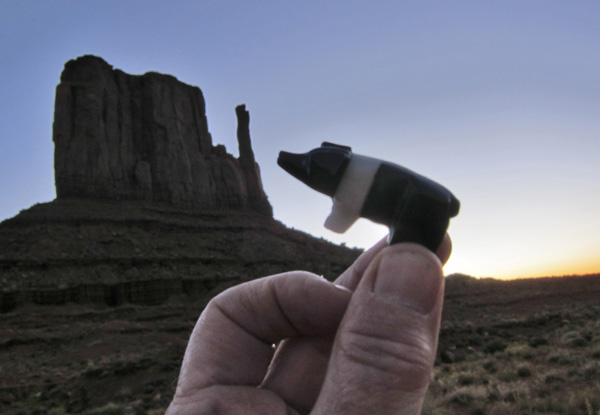
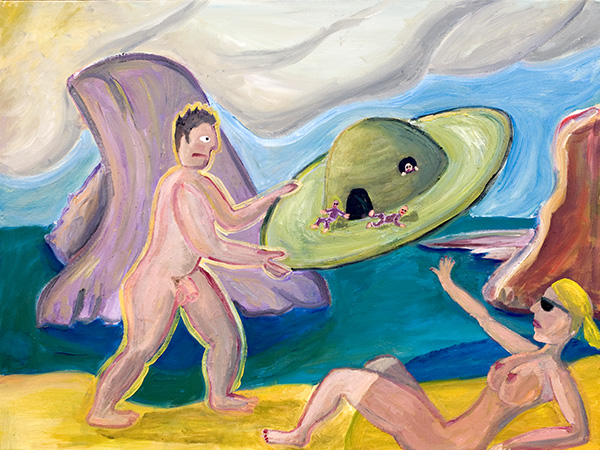
I’m working on my Turing novel these days. Lately I’ve been looking at this recent oil painting of mine, Nude Nabs UFO, that hangs on my office wall. I did a lot of layers on it, and the colors are very rich. Writing can be like that too. You keep adding layers and extra bits until it has this nice patina. That’s more along the lines of what literary novelists do—as opposed to frantically rushing on to new special effects and wild surprises, as I’m sometimes prone to do. You can click on the image below to see a larger version.
So what’s going on in this chapter anyway? Well, Alan Turing has shapeshifted himself into the form of William Burroughs, is booked onto the Phos tramp steamer from Gibraltar to Miami.
There’s a sinister and slimy guy named Neddy Strunk on the ship, and as the Phos nears Miami, Neddy has a confrontation with Alan into his custody. Somehow Neddy knows that Turing has become a shapeshifter, and he wants something from Alan, but Alan loses it and violently throws Strunk over the ship’s railing before listening any more. Looking down into the Bahamian waters, Alan sees Neddy’s body as a glowing white form that follows the ship for a bit and then dives into the depths like a dolphin.
I think Strunk is in fact a shapeshifter like Alan—a human who has become what I’m calling a skug. It may even be that Strunk and the skugified Pratt from my Flurb story, “The Skug,” are one and the same, thanks to potency of skug flesh. I might suppose that a chunk of Pratt followed Alan from Tangier to Gibraltar—the thing eats some local in Gibraltar and mutates into the unpleasant Neddy Strunk.
So what does Strunk want from Alan? He wants a wetware upgrade. The skug that Alan used when dissolving Pratt wasn’t fully optimized like the skug that Alan used when merging himself with William Burroughs. The Strunk-skug grew from a scrap of Pratt, and doesn’t have such good functionality.
Why doesn’t Alan welcome the Strunk-skug? I think it’s mainly that he doesn’t quite understand what Strunk is, and fights with him and throws him overboard before Strunk’s skuggy nature comes clear as he glows and swims away. At a deeper level, Alan’s repulsion is like that of Dr. Jekyll repelled by the deeds of Mr. Hyde, like the Baron von Frankenstein repelled by his monster, or like an author repelled by his id.
Looking ahead along the story arc, I really would like to know what these mysterious agents and skugs are up to. And what will Turing’s goal be? I know from experience that the task in and of itself doesn’t have to be all that important or recondite—we’re really just talking about a Maguffin. But the reader likes to have a fixed goal in mind.
Backing off for a moment from my thoughts about a goal, I want to think about the “high concept” method of structuring a plot. You make one simple but drastic change in the world that percolates out with many interesting effects. What I’d like to do in Turing & Burroughs is to use shapeshifting via skugs as my high concept.
Shapeshifting is a fairly rich metaphor: Universal computation. Transgendering. Artistic creation. Personal growth. Psychosis. And the skugs who potentiate the shapeshifting have the connotation of creativity out of control. The beatniks.
Generally a skug will be integrated with a person and simply be giving them higher powers. Perhaps from time to time a skug can in some sense go rogue and behave like a subhuman—this would represent a kind of curdling in the shapeshifter gift. Some people lose control and become wholly chaotic, devolving into rogue skugs.
Doing some research in my bookcases, I came across a really cool shapeshifter in the form of the character Plastic Man in the Jack Cole comics of the 1940s and early 1950s. In 1999, Art Spiegelman wrote a wonderful New Yorker article “Forms Stretched to Their Limits,” about Jack Cole. And later Chip Kidd added Cole’s strips and illustrations to the article to make a lovely book, Jack Cole and Plastic Man (Chronicle Books, 2001). I may first heard of Plasticman [sic] in Thomas Pynchon’s Gravity’s Rainbow—see this cool reference page for that.
Summing up today’s notion of my plot, it’s about a guy who invents a method for turning himself into a shapeshifter or, more concisely, a skug. He does shapeshifting for fun, and now and then for commercial gain or for sexual pleasure. He might become a woman, a dog, a big bird. He is able to communicate this skugly power to others, and the shapeshifting spreads. Pretty much everyone at the Six Gallery reading of Ginsberg’s “Howl” was a skug. And what orgies they had in those times!
In a nutshell, or, rather, in a tweet, I see my Turing and the skugs story as follows. “Being creative = shapeshifter = skug infection. Art = communicable disease.”

Back to story-arc. How does the scientist-created-mutation-story end? I see two models that I’ll call Retraction and Repression. In either model, the scientist dies nobly fighting at the end, or perhaps he flips into some unknown new dimension of reality.
(Retraction) The scientist decides it was a mistake and, with great labor, manages to roll back the infestation. In the Retraction story line, the skugs get so freaky that Turing himself realizes they were a mistake, and he labors to undo them.
(Repression) The government or some more free-form group akin to a lynch mob battles to wipe out the mutants. In the Repression story line, the right-wing segments of the government crack down on the skugs.

My knee-jerk reaction is to go for the Repression model, because that’s closer to how I see our actual society operating. But really the Retraction model offers more dramatic possibilities. We begin with a Repression model, and Turing is defending the skugs from exploitation by the military and making skugness a tool of the intelligentsia. But then the skugs go too far. One might think here of psychedelic drugs—initially they were hailed as tools of psychic liberation, but over time we came to see the drugs burning out some people. We could dial up this notion with the skugs—at some point the skugs could start doing much more harm than good. And then Turing might, albeit reluctantly, join in the crackdown against skugs.
Maybe he Pied Pipers them into a nuclear blast—which would be a very classic 1950s-SF kind of ending. Having grown up in the 1950s, I’ve always had this moth-like desire to step into the core of an exploding H-bomb…