
Click covers for info. Copyright (C) Rudy Rucker 2021.


Author Archive

William Burroughs in Palm Beach

Tuesday, November 9th, 2010

In the course of my work on Turing & Burroughs, I’m thinking of a scene in which Alan Turing, disguised as William Burroughs goes to the Burroughs parents in Palm Beach, Florida, in January, 1955. And I’m trying to visualize what this would be like.

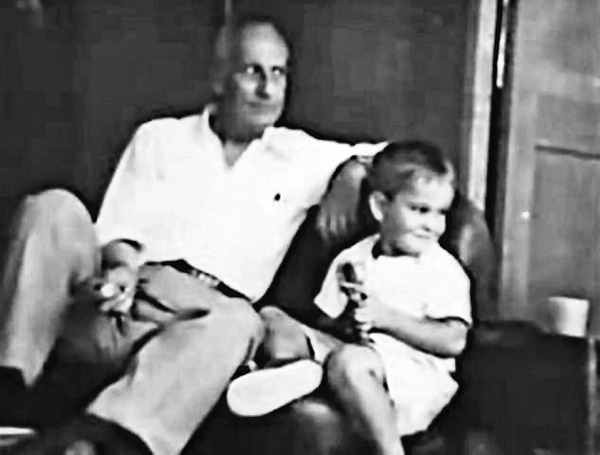
I found a photo of Mortimer Burroughs with Billy, Jr., on a memorial page, apparently made by a fan or by some people who make a living of creating memorial pages. Mote, as he was called, was born in St. Louis in 1885. So he was seventy in 1955. He lived ten more years.

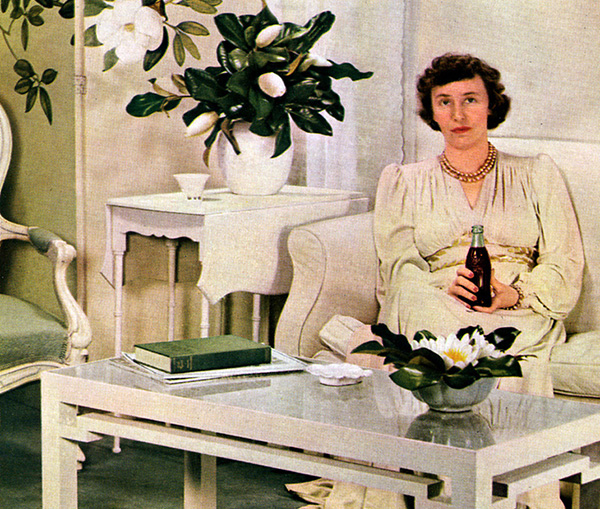
Mote’s wife Laura Lee Burroughs was three years younger, and from Georgia. I found Laura Lee’s photo in this cool article, “Like Mother, Like Son,” about some books on flower-arranging that she wrote for the Coca-Cola company!

I also learned that the Burroughs home was at 202 Sanford Ave in Palm Beach, here’s a satellite view. I’ve been using the street-view mode on this page to walk around near the house. Palm Beach is this narrow strip of sand with water on the inland side as well.

I’d forgotten that Bill’s son William Burroughs, Jr., known as Billy, may have living with the grandparents, which complicates things.

Billy was born in 1947, so he’d be eight in 1955. Our Burroughs did visit his parents in Palm Beach in October, 1954, according to Ted Morgan’s biography, Literary Outlaw, p. 251. Wikipedia indicates that Billy Jr. only moved there with grandparents when he was 10, or in 1957, but I’m guessing this is an error.

In any case, I got the location of the house from Billy’s third (and posthumous) book, Cursed from Birth, available new and used online. I have his earlier autobiographical novels, Speed and Kentucky Ham. It’s kind of a sad story, he died young. Here’s a bit from Cursed from Birth about the Palm Beach home.

Mote and Laura moved to Palm Beach so I could grow up wholesome. For ten years, we lived at 202 Sanford Avenue, a street lined with royal palm trees where the houses get smaller and some of them have no servants. My grandparents ran an antique-furniture business on Worth Avenue, Cobblestone Gardens, where they sold elegant antiques to the very rich, and always met them at the door. The house was full of the creaking stuff. Some of the rooms were furnished according to different historical periods, but after Mote was gone, my grandmother sold a lot of it and scrambled up the rest. We had a lot of old Victorian articles with taloned paws carved on the legs; one coffee table actually had wings.

Hung the Show. Thoughts on Halloween.

Saturday, November 6th, 2010

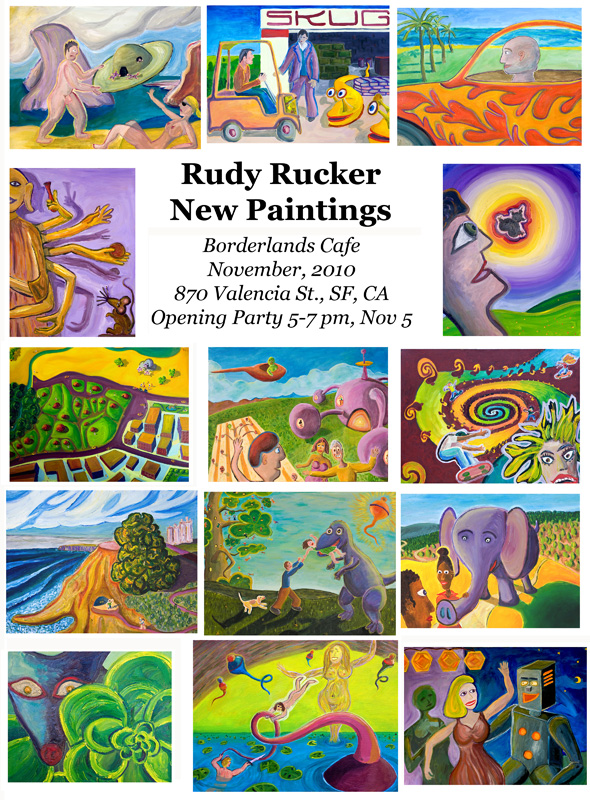
On Friday we had the opening of my art show at the Borderlands Café on Valencia Street in San Francisco. We got about 20 guests for the opening, and the place was full in any case, with a steady flow of hipsters. My artist friends Paul Mavrides and Hal Robbins showed up with some of Hal’s fractal-freak friends from NYC, R. U. Sirius was there with a “blotter artist,” my son Rudy Jr. was there with his family, fellow Flurb writer Charlie Jane Anders of io9 (and frequent contributor to Flurb) showed up, and my freestyle SF-writer pal Michael Blumlein appeared with his wife and we had dinner together. I shot a video right after hanging the pictures, for what it’s worth, here it is.

Borderlands has a pretty good supply of signed prints of my paintings right now, with more coming into stock later this week. I’ve been making them at home on highest quality Museum Etching paper, 19 x 13 inches, using a Canon Pro9500 inkjet printer with ten colors of ink. Just the paper and ink cost me about $10 per print, and right now we’re selling them at Borderlands for, I think, $35 each. You can also buy unsigned prints of my paintings online for a comparable price at rudy.imagekind.com, where you can select various sizes, paper grades and possible frames.

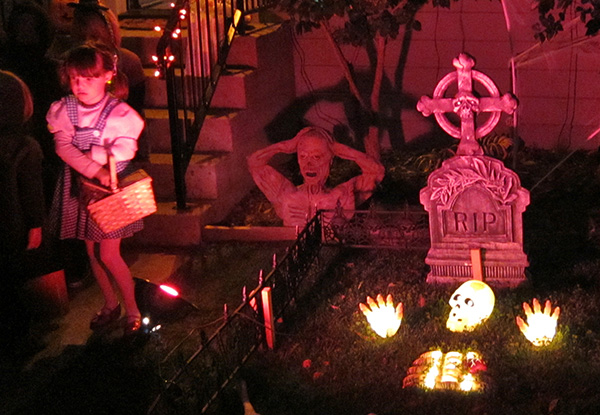
On Halloween, Sylvia and I went walking on Tate Avenue in Los Gatos, which has come, over the years, to be a really popular holiday street. The people who live there go all out with the decorations, and ton of trick-or-treaters turn up. Dig this light-up zombie rising from the grave as a little girl darts past.

Halloween is an odd holiday, kind of unique to the US—it’s not exactly like All Saints Day or the Day of the Dead. It’s more about facing your most horrible fears and somehow finding them funny, or at least thrilling. And getting candy.

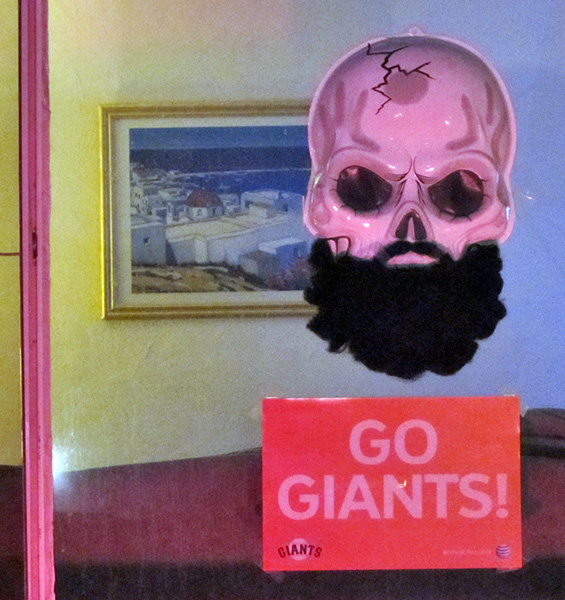
I liked this topical icon of Brian “The Beard” Wilson, the SF Giants’ closer pitcher. Though we rarely watch sports, we got into viewing the whole Series. It’s surprising how many really close and somewhat arbitrary calls the umps have to make, and interesting that there seems to be no movement towards using instant replays to check the calls on the field. Maybe that would slow things down too much. As it stands, there’s an element of “psych” in the calls. It also surprised me how often there are tiny little-known sub-codicils of the rules that come into sway.

After California beat Texas in the series, I was hoping it would be a good omen for the congressional elections. Oh well!

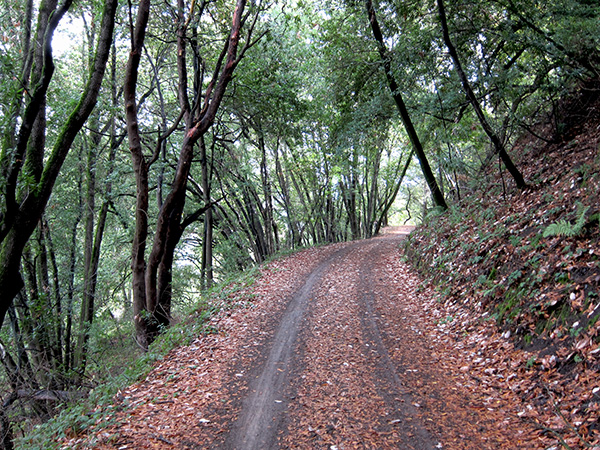
When all else fails, I always like to take a walk in the woods. I’m making good progress on on Turing & Burroughs, I have Alan Turing at the Burroughs family house in Palm Beach right now. Shapeshifter that he is, he’s wearing Bill Burroughs’s body-form and is trying to tell the Burroughs parents that he’s not really Bill, and of course they think he’s insane. I think he’ll have to bail from there quite soon.

Art Show at Borderlands Cafe

Tuesday, November 2nd, 2010

Another art show! Rudy’s latest paintings.

It’ll run all month, starting November 5 at Borderlands Cafe at 870 Valencia Street in San Francisco. Public parking lot on 21st street.

Opening party is Friday, November 5, from 5 to 7 pm. Join us if you can!

High Concept: Shapeshifting With Skugs

Saturday, October 30th, 2010

I’m working on my Turing novel these days. Lately I’ve been looking at this recent oil painting of mine, Nude Nabs UFO, that hangs on my office wall. I did a lot of layers on it, and the colors are very rich. Writing can be like that too. You keep adding layers and extra bits until it has this nice patina. That’s more along the lines of what literary novelists do—as opposed to frantically rushing on to new special effects and wild surprises, as I’m sometimes prone to do. You can click on the image below to see a larger version.


So what’s going on in this chapter anyway? Well, Alan Turing has shapeshifted himself into the form of William Burroughs, is booked onto the Phos tramp steamer from Gibraltar to Miami.

There’s a sinister and slimy guy named Neddy Strunk on the ship, and as the Phos nears Miami, Neddy has a confrontation with Alan into his custody. Somehow Neddy knows that Turing has become a shapeshifter, and he wants something from Alan, but Alan loses it and violently throws Strunk over the ship’s railing before listening any more. Looking down into the Bahamian waters, Alan sees Neddy’s body as a glowing white form that follows the ship for a bit and then dives into the depths like a dolphin.

I think Strunk is in fact a shapeshifter like Alan—a human who has become what I’m calling a skug. It may even be that Strunk and the skugified Pratt from my Flurb story, “The Skug,” are one and the same, thanks to potency of skug flesh. I might suppose that a chunk of Pratt followed Alan from Tangier to Gibraltar—the thing eats some local in Gibraltar and mutates into the unpleasant Neddy Strunk.

So what does Strunk want from Alan? He wants a wetware upgrade. The skug that Alan used when dissolving Pratt wasn’t fully optimized like the skug that Alan used when merging himself with William Burroughs. The Strunk-skug grew from a scrap of Pratt, and doesn’t have such good functionality.

Why doesn’t Alan welcome the Strunk-skug? I think it’s mainly that he doesn’t quite understand what Strunk is, and fights with him and throws him overboard before Strunk’s skuggy nature comes clear as he glows and swims away. At a deeper level, Alan’s repulsion is like that of Dr. Jekyll repelled by the deeds of Mr. Hyde, like the Baron von Frankenstein repelled by his monster, or like an author repelled by his id.

Looking ahead along the story arc, I really would like to know what these mysterious agents and skugs are up to. And what will Turing’s goal be? I know from experience that the task in and of itself doesn’t have to be all that important or recondite—we’re really just talking about a Maguffin. But the reader likes to have a fixed goal in mind.

Backing off for a moment from my thoughts about a goal, I want to think about the “high concept” method of structuring a plot. You make one simple but drastic change in the world that percolates out with many interesting effects. What I’d like to do in Turing & Burroughs is to use shapeshifting via skugs as my high concept.

Shapeshifting is a fairly rich metaphor: Universal computation. Transgendering. Artistic creation. Personal growth. Psychosis. And the skugs who potentiate the shapeshifting have the connotation of creativity out of control. The beatniks.

Generally a skug will be integrated with a person and simply be giving them higher powers. Perhaps from time to time a skug can in some sense go rogue and behave like a subhuman—this would represent a kind of curdling in the shapeshifter gift. Some people lose control and become wholly chaotic, devolving into rogue skugs.

Doing some research in my bookcases, I came across a really cool shapeshifter in the form of the character Plastic Man in the Jack Cole comics of the 1940s and early 1950s. In 1999, Art Spiegelman wrote a wonderful New Yorker article “Forms Stretched to Their Limits,” about Jack Cole. And later Chip Kidd added Cole’s strips and illustrations to the article to make a lovely book, Jack Cole and Plastic Man (Chronicle Books, 2001). I may first heard of Plasticman [sic] in Thomas Pynchon’s Gravity’s Rainbow—see this cool reference page for that.

Summing up today’s notion of my plot, it’s about a guy who invents a method for turning himself into a shapeshifter or, more concisely, a skug. He does shapeshifting for fun, and now and then for commercial gain or for sexual pleasure. He might become a woman, a dog, a big bird. He is able to communicate this skugly power to others, and the shapeshifting spreads. Pretty much everyone at the Six Gallery reading of Ginsberg’s “Howl” was a skug. And what orgies they had in those times!

In a nutshell, or, rather, in a tweet, I see my Turing and the skugs story as follows. “Being creative = shapeshifter = skug infection. Art = communicable disease.”

Back to story-arc. How does the scientist-created-mutation-story end? I see two models that I’ll call Retraction and Repression. In either model, the scientist dies nobly fighting at the end, or perhaps he flips into some unknown new dimension of reality.

(Retraction) The scientist decides it was a mistake and, with great labor, manages to roll back the infestation. In the Retraction story line, the skugs get so freaky that Turing himself realizes they were a mistake, and he labors to undo them.

(Repression) The government or some more free-form group akin to a lynch mob battles to wipe out the mutants. In the Repression story line, the right-wing segments of the government crack down on the skugs.

My knee-jerk reaction is to go for the Repression model, because that’s closer to how I see our actual society operating. But really the Retraction model offers more dramatic possibilities. We begin with a Repression model, and Turing is defending the skugs from exploitation by the military and making skugness a tool of the intelligentsia. But then the skugs go too far. One might think here of psychedelic drugs—initially they were hailed as tools of psychic liberation, but over time we came to see the drugs burning out some people. We could dial up this notion with the skugs—at some point the skugs could start doing much more harm than good. And then Turing might, albeit reluctantly, join in the crackdown against skugs.

Maybe he Pied Pipers them into a nuclear blast—which would be a very classic 1950s-SF kind of ending. Having grown up in the 1950s, I’ve always had this moth-like desire to step into the core of an exploding H-bomb…


Rudy's Blog is powered by WordPress