




[Noted added in January, 2017: I put up this post in December, 2010, while working on my novel Turing and Burroughs. You can find links for paperback, ebook, and a free webpage version of the book at the Turing & Burroughs page.]
I’m about to write a new chapter (Chapter 8: Dispatches from the Interzone) for my Turing & Burroughs in the form of letters by William Burroughs—following up on my earlier chapter, “Tangier Routines” which appeared in my zine Flurb.
By way of getting into the right frame of mind, today I copied out some of my favorite bits from a book I’ve had for nearly thirty years, William Burroughs, Letters to Allen Ginsberg 1953-1957, (Full Court Press, New York 1982). This book is out of print, but many of these letters are also in Oliver Harris (ed.), The Letters of William Burroughs 1945-1959 (Viking, New York, 1993). All of the letters I’ve excerpted below are from Tangier, and are to Allen Ginsberg.
6/24/54. I’ve been thinking about routine as an art form and what distinguishes it from other forms. One thing… it is subject to shlup over into “real” action at any time. Do you dig me? I am not sure if I dig myself. And some [poser] is going to start talking about living his art.
6/24/54. I am surrounded by curious Kafkian hostility. A number of people seem to have taken a violent, irrational dislike to me. Especially people who run bars.… This is not imagination, Allen.
8/18/54. What am I doing here, a broken eccentric, a Bowery Evangelist, reading books on Theosophy in the public library—(an old trunk full of notes in my cold water East Side flag)—imagining myself a Secret World Controller in Telepathic Contact with Tibetan Adepts… Could I ever see the merciless, cold facts on some Winter night, sitting in the operation room white glare of a cafeteria—NO SMOKING PLEASE—See the facts and myself, an old man with the wasted years, behind, and what ahead having seen the Facts?”
8/18/54. I am having serious difficulties with my novel. I tell you the novel form is completely inadequate to express what I have to say. I don’t know if I can find a form. I am very gloomy as to prospects of publication… But still I need publication for development. A writer can be ruined by too much or too little success.
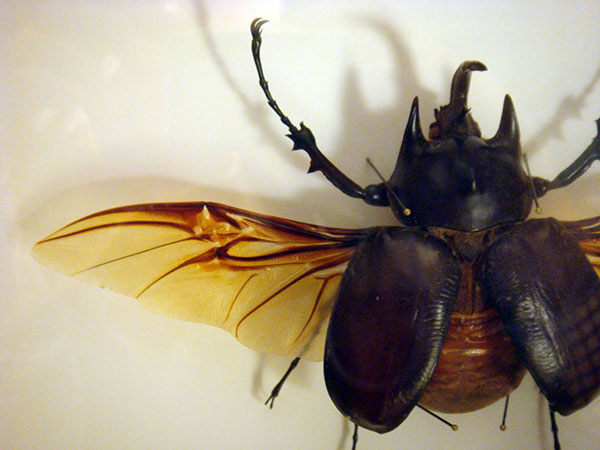
10/12/54 (date uncertain). Tremendous dream.… I walk along a dry, white road. There is danger here. A dry, brown vibrating in the air, like insect wings rubbing together. I pass a village of people sleeping, living under mounds—about 2 feet high—of black cloth stitched onto wire frames.… The vibrating is everywhere now—horrible, dry, lifeless. Not a sound exactly; a frequency, a wave length. The vibrating comes from a tower-like structure. A Holy Man is causing it.… I approach [the townspeople] and ask “How much will you give me to kill the Holy Man?” We… both know money is not the point.
12/13/54. You don’t study Zen and then write a scholarly routine, for Christ’s sake! Routines are complete spontaneous and proceed from whatever fragmentary knowledge you have. In fat a routine is by nature fragmentary, inaccurate.… Sex mixed with routines and laughter, the unmalicious, unstrained, pure laughter that accompanies a good routine, laughter that gives a moment’s freedom from the cautious, nagging, aging, frightened flesh.
2/19/55. I guess all writers suffer from fear of losing their talent, because talent is something that seems to come from outside, that you have no control over.
2/19/55. The novel is taking shape. Something even more evil than atomic destruction is the theme—namely an anti-dream drug which destroys the symbolizing, myth-making, intuitive, empathizing, telepathic faculty in man, so that his behavior can be controlled and predicted… this drug eliminates the disturbing factor of spontaneous, unpredictable life from the human equation.… Novel treats of vast… malevolent telepathic broadcast stations…
4/20/55. Why do I always parody? Neither in life nor in writing can I achieve complete sincerity… except in parody and moments of profound discouragement.
5/17/55. Just back from 14-day cure in clinic.… Everything looks sharp and different like it was just washed. Sensations hit like tracer bullets. I feel a great intensity building up, and at the same time a weakness like I can only keep myself here, back now in this doughy, dead flesh I have been away from since the habit started.
8/10/55. [Describing a crazy man who keeps accosting him on the street.] In fact there is something curiously sweet about him, a strange, sinister jocularity, as if we knew each other from somewhere, and his words referred to private jokes from this period of intimacy. On Monday, August 1, he ran amok with a razor-sharp butcher knife in the main drag, killed 5 people and wounded four, was finally cornered by the police, shot in the stomach and captured.… I wonder if he would have attacked me? I missed him by 10 minutes. The whole town is still hysterical.
9/21/55. [He gets very high on opiates and makes a scene at his rooming house.] I could only remember snatches of what had happened, but I do remember wondering why people were looking at me so strangely and talking in such tiresome, soothing voices.
10/21/55. [He’s working on the novel he calls Interzone, and which will become Naked Lunch.] This writing is more painful than anything I ever did. Parentheses pounce on me and tear me apart. I have no control over what I write, which is as it should be.
10/23/55. I am progressing towards complete lack of caution and restraint. Nothing must be allowed to dilute my routines. I know I used to be shy about approaching boys, for example, but I cannot remember why exactly. The centers of inhibition are atrophied, occluded like an eel’s ass on The Way to Sargasso—good book title. You know about eels?
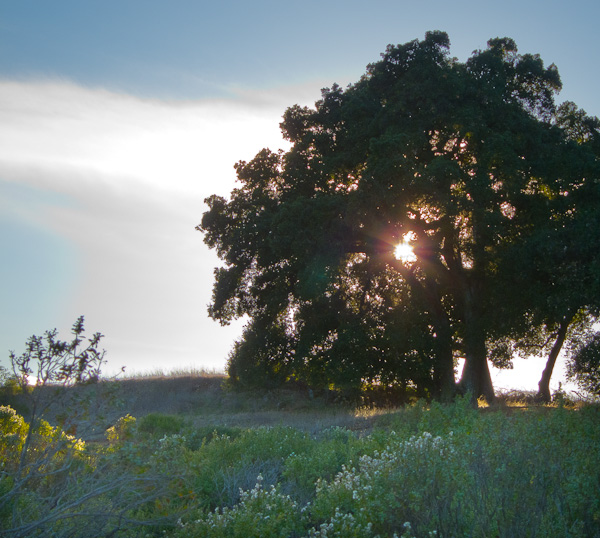
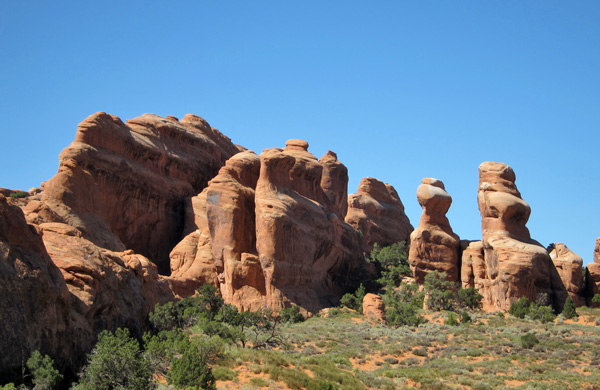
10/23/55. Yesterday I took a walk on the outskirts of town. Environs of the Zone are wildly beautiful. Low hills with great variety of trees, flowering vines and shrubs, great, red sandstone cliffs topped with curiously stylized, Japanese-looking pine trees, fall to the sea.… The knife fight potential was… one facet of that moment, sitting in the café, looking out at the hill opposite, stylized pine trees on top arranged with the economy of a Chinese print against blue sky in the tingling, clear, classic Mediterranean air… I was completely alive in the moment, not saving myself, not waiting for anything or anybody… This is it right now… Actually I am so independent, so fucking far out I am subject fo float away like a balloon…
11/13/55. Arab Café: Sit down and had three words… just three long words, with Miss Green… Watching a glass of mint tea on a bamboo mat in the sun, the steam blow back into the glass top like smoke from a chimney… Some Arabs at a table .. It is unthinkable they should molest me… Suppose they do? And suddenly they have seized me, and are preparing to castrate me? It can’t happen… must be a dream .. In Interzone it might or might not be a dream, and which way it falls might be in the balance while I watch this tea glass in the sun… The meaning of Interzone, its pace time location is at a point where three-dimensional fact merges into dream, and dreams erupt into the real world.

2/26/56. When I was a child I thought you saw with your mouth. I remember distinctly my brother telling me no, with the eyes, and I closed my eyes and found out it was true and my theory was wrong.
9/13/56. [Describing a boy who wants to spend the night at his apartment after sex.] I indicate as tactfully as such a concept can be effectively indicated that I considered this project inconvenient in the widest sense.… So come along to Europe, Allen, and have a good time with the boys. I can wait. But just remember I’ll always be there if you want me… creak, creak, creak… [sound of a rocking chair]
9/13/56. And you recall my dream (described in letter of 10/12/54) about the Holy man who was making with a Malignant Telepathic Broadcast?… I am developing Holy Man concept in [my novel] Interzone. Latest Control Concepts: Anyone using telepathy as means of coercion must cut himself off form all protoplasmic contacts. He must always send, but never receive… He becomes an automaton, a ventriloquist dummy, withers in orgoneless limbo.

9/16/56. I find my eyes straying towards the fair sex. (It’s the new frisson dearie… Women are downright piquant.) You hear about these old characters find out they are queer at fifty, maybe I’m about to make with the old switcheroo. What are those strange feelings that come over me when I look at a young [woman], little tits sticking out so cute? Could it be that?? No! No! He thrust the thought from him in horror… He stumbled out into the street with the girl’s mocking laughter lingering in his ears, laughter that seemed to say “Who you think you’re kidding with the queer act? I know you, baby.”
10/13/56. Germs got no class to them. And the evilest of them all are the virus… So bone lazy they aren’t even hardly alive yet
10/29/56. My disregard of social forms is approaching psychosis.… It’s like the sight of someone about to flip or someone full of paranoid hate excites me. I want to see what will happen if they really wig. I want to crack them wide open and feed on the wonderful soft stuff that will ooze out.… Kicks, man, kicks.