

This is a partial draft of a chapter named “Surf World,” from my novel in progress, Million Mile Road Trip, which will appear in late 2016 or in 2017. It’s in some ways inspired by the surfin’ SF stories I’ve written with Marc Laidlaw. See, for instance, our recent “Water Girl.”
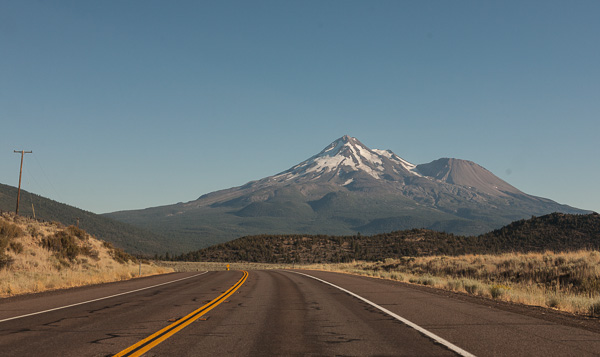
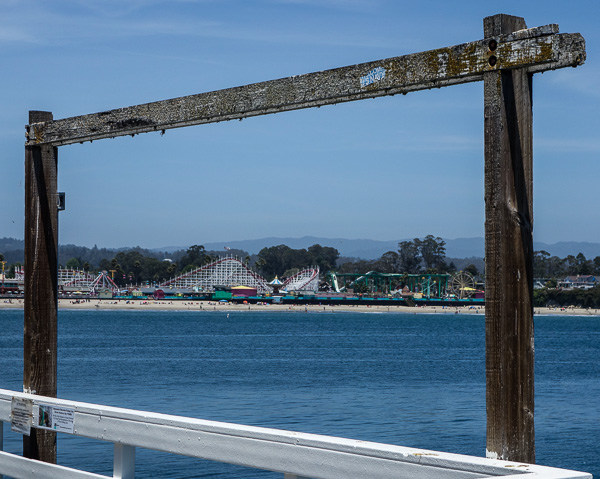
Mount Shasta seen on a road trip in 2014…a moment that inspired this novel.
The cast of characters in “Surf World”: Villy and Zoe are on the point of graduating from high-school in Los Perros, Califorina. But they’ve left town for a road trip. A road trip across the worlds of a parallel universe. Their companions are a pair of “Szep” aliens named Pinchley and Yampa. Villy’s tenth-grade kid brother Scud has come along.
And now they’re entering a zone called Surf World.
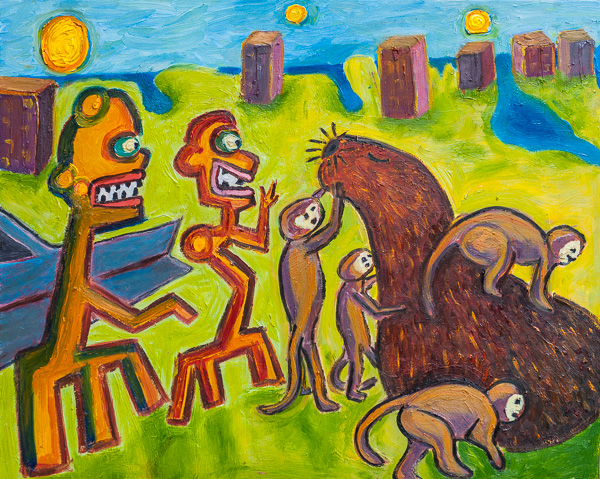
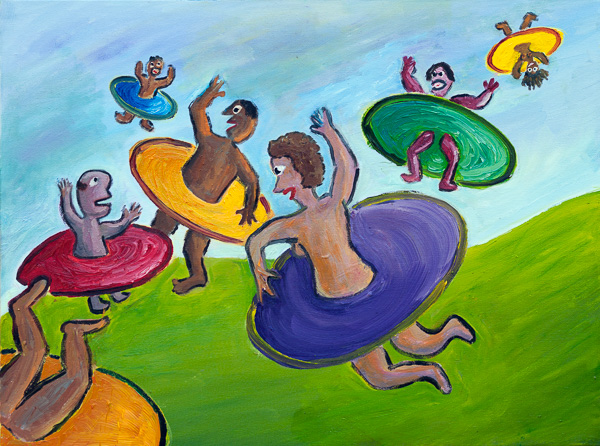
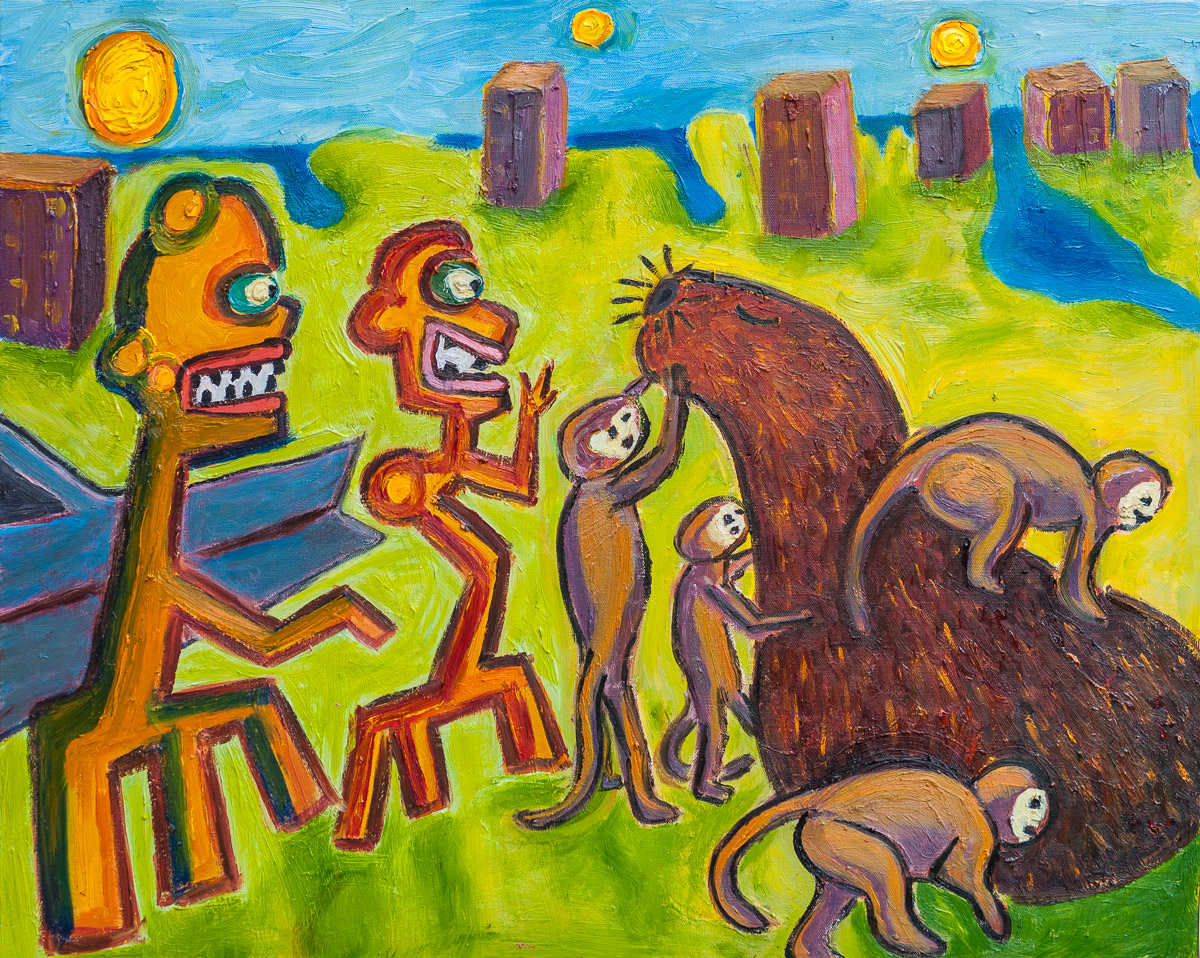
“Endless Road Trip” oil on canvas, Sept, 2014, 30” x 24”. Includes images of my alien characters Pinchley and Yampa. Click for a larger version of the painting.
The Surf World light is a honeyed gold, like the light you get in Santa Cruz an hour before sunset. But as for the surf—maybe the waves are bigger than Villy realized before. Hard to judge, with their shapes so strange. And there’s no consistent flow. The waves go every which way, surging through each other, with no apparent regard for physical law. Staring at them does something unpleasant to Villy’s head and, in the weirdness of the moment, everything seems small and overly animated. Like he’s looking through binoculars the wrong way.
“Too gnarly?” asks Pinchley, waggling his lower jaw in an open-mouthed Szep grin. “You know what’s with them waves? They alive.”
“You mean ”˜alive’ in the broad, stoner sense that everything is alive?” says Villy, trying to sound all ironic and calm.
“Alive in the sense that the Surf World ocean is ten percent smeel,” says Pinchley. “A brimming cocktail of consciousness, bro. Pure trippiness unmodified.”
It’s not remotely like anything he’s ever seen. The waves really are alive. Quirky, willful, and no two of them the same. Shape, shade, speed, size—everything’s up for alteration. The waves do what they want.
They’re driving a highly modified station wagon which they call the purple whale. They’ve equipped it with enormous paddle-wheel tires, and with a waterproof dark-energy engine. Pinchley issues his considered advice about how to launch the purple whale into massively chaotic wrong-way surf.
“Bomb on in there like you’re crazy and high.”
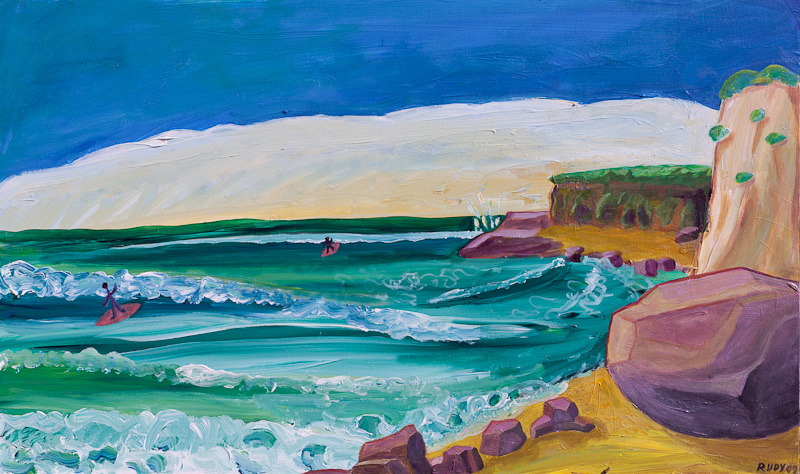
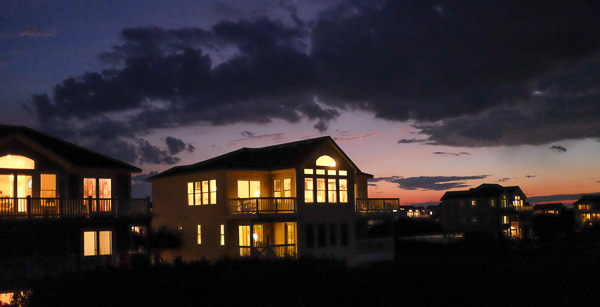
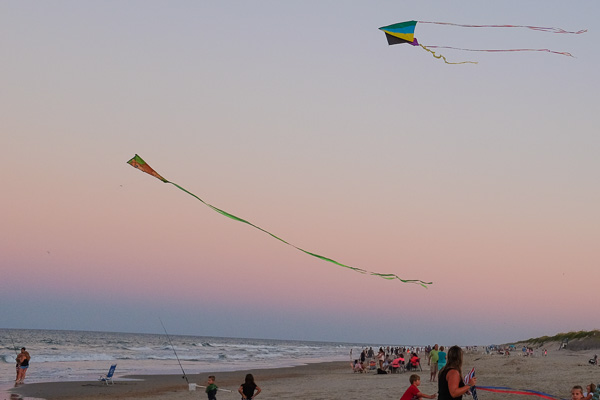
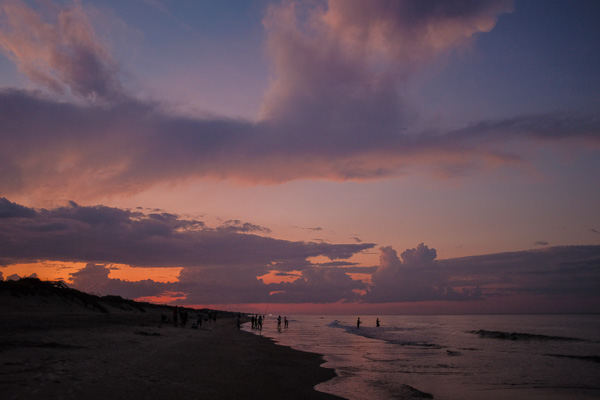
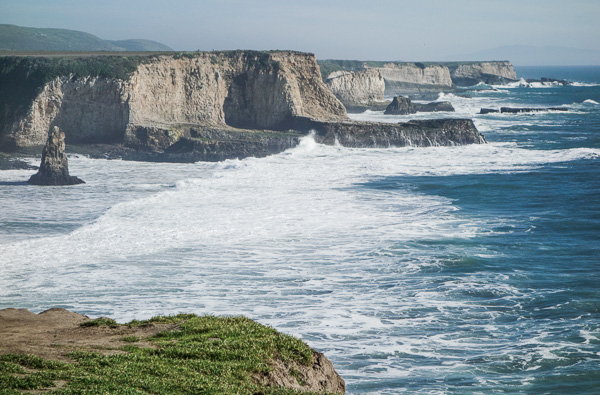
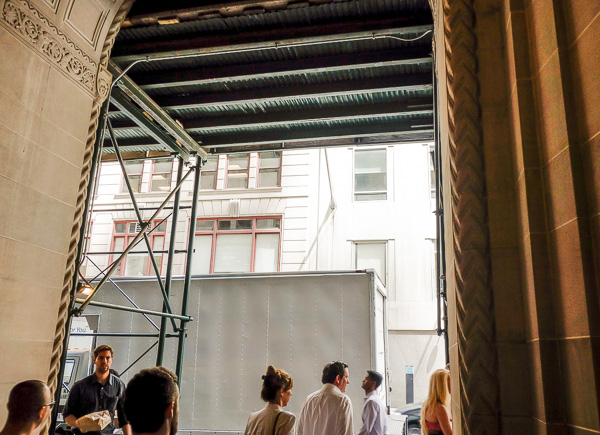
Four Mile Beach
“Yeek!” says Zoe, getting into it. She revs the dark energy engine to the max and rockets into the sea. Almost immediately, a massive pup-tent wave blindsides the car. Like it’s a rival skater in a roller derby. Zoe stays cool. She keeps the wheels churning, turns the steering wheel, and maneuvers them through a stretch of puffballs and onto the backside of a monstrous comber that’s rolling away from the shore.
“When you get to the top, drop and ride,” counsels Villy.
And, yes, Zoe makes it up the back of the hundred-foot wave, teeters on the lip, and then drops onto the tube’s clean, smooth face. She idles the engine and the purple whale begins endlessly to skim along the self-renewing hill of water. It’s like riding a titan at Mavericks. Sweet.
It’s calm for awhile—the big wave is swallowing everything it hits, sweeping a path through the living sea. The greens and blues of the sea are beautiful in Surf World’s golden light. The whale rides the wave for nearly an hour. According to the car’s altered speedometer, they’re moving at four hundred miles an hour.
“Blub, blub, bloo!” yells Scud. He’s got his window wide open, and he’s hanging out like a tongue-lolling dog on a car trip. “Here comes a pyramid covered with rice paddies?”
Yes, it’s an Incan ziggurat made of smeely seawater, a water-pyramid with stairstep escalators for its sides. Three times as high as the enormous comber and moving twice as fast. As it angles into their big wave, vicious eddies swirl towards the purple whale. The water’s surface is, like, pocked.
Skillful Zoe adjust their car’s rudder and uses the gas, speeding up and slowing down, and then—behold. She’s maneuvered them off their disintegrating pipeline and onto the rising terraces of the epic ziggurat.
“Ride the terraces to the peak,” Villy advises Zoe,. “Then gun it down the other side.”
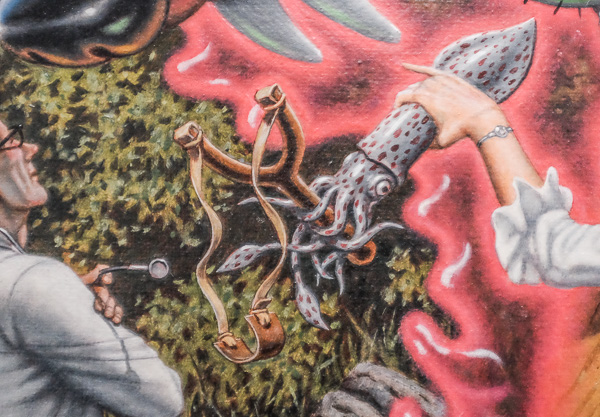
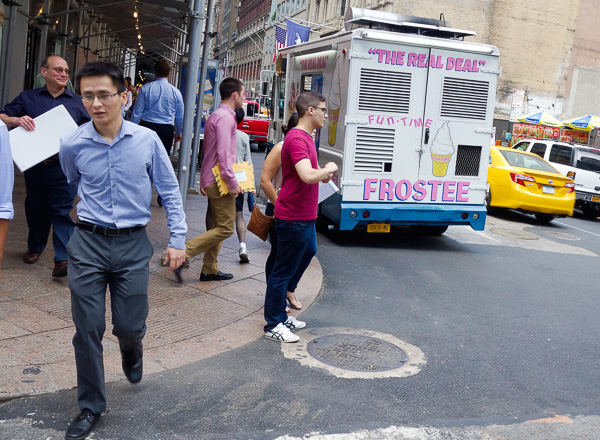
Gravedigger monster truck, Kill Devil Hills, North Carolina.
“What a way to die, huh?” says Zoe, shooting him the briefest of glances over he shoulder. A pert smile. Okay, fine, Zoe’s not suicidal, but she does have a reckless side. Why else would she hang with Villy?
“Ready to surf?” Yampa asks Villy. “We’ll climb on the roof and mount our boards.”
“Not yet,” says Villy. “Too blown-out. Let’s wait for those giant walls we saw. Archetypal surf.”
The ziggurat is picking up speed, swallowing up a platoon of mammoth comber waves. Cathedral-sized pup-tent waves spawn off of these collisions and come pinballing up the pyramid’s terraced steps.
“Rock it, Zoe,” says Pinchley, “By the way, y’all, we’re flat-out unsinkable with these fatso tires. But a wave could wash a dumb-ass out one of these windows. If they was greenhorn enough to have it open and to be leanin out in a situation like this. Talkin to you, Scud.” Pinchley says the name like, “Scuuuuud.” He’s steadily amusing himself with his Southern accent routine.
Scud closes his window just in time. When they get to the top of the ziggurat, it turns out the very highest level—the square on the tippy-top—well, it’s a hole, an insane horror-movie elevator shaft running down into the dim, churning core the vast ziggurat’s metabolism.
“Yeek!” yells Zoe once again. She floors the gas and the responsive dark-energy engine screams. Tires spinning like buzz saws, they rocket into the air and—arcing across the fearsome hole. And nosedive into one of the blocky pyramid’s square terraces, where they spend a full two minutes underwater, tumbling in the complex currents. When they bob back up, they’re on that same ziggurat terrace—or maybe it’s another one—bur for sure they’re descending towards sea level at a steady pace.
Various waves are moving into the smeel-rich waters around the drifting purple whale. Combers, pup-tents, puffballs, ziggurats and—
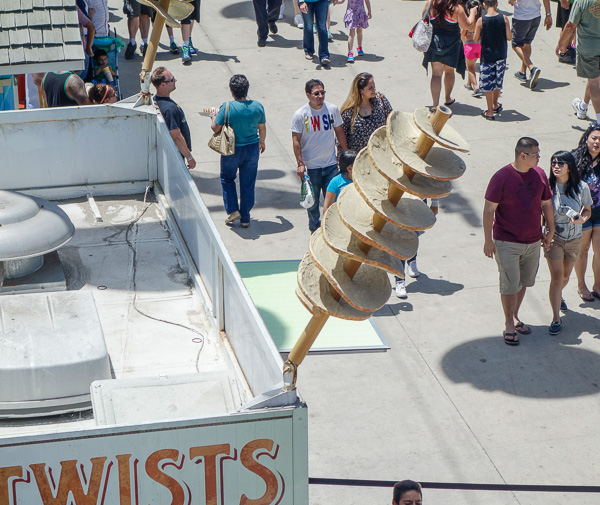
“A giant corkscrew?” says Zoe. “Like a big drill spinning through the water. Only the drill itself is made of water, too?”
“Catch it!” says Pinchley. “Those twisty suckers can carry you a thousand miles express. Get up to speed, Zoe, and edge onto it while its passing.”
“Yah, mon,” goes Zoe. “I have the whim-whams.”
The corkscrew wave is a helix of of curved, sloping faces, one behind the other, with each face rising out of the sea on the left, and arcing down on the right. A wave-train many miles long. The successive faces are linked by powerful underwater currents. A low bulge runs down the axis of the corkscrew, like the shaft of a ship’s propeller. Zoe has a little trouble getting the whale into a stable position on one of the blades. More than a little. At one point the car is totally submerged—tumbling ass over teakettle like a surfer in a wipe-out, and everyone screaming at once.
Villy and Scud are itching to take over, but Zoe persists. Eventually she finds a sweet spot where the car is endlessly sliding down a glassy face whose vortical motion is lifting then as fast as they descend. Like running on a treadmill. For the moment they don’t need the paddlewheels at all.
“Ready to surf?” says Yampa, leaning right into Villy’s face. She smells like curry and gasoline.
“Almost.”
“Buk buk squawk,” goes Yampa. Her notion of imitating a chicken.
“Look out there way ahead,” says Villy. “Those giant moving walls. They’re the waves we’ll ride. Zoe will tow us in.”
“Yaar,” says Yampa, parroting Villy. “Make tow ropes for us, Pinchley!”
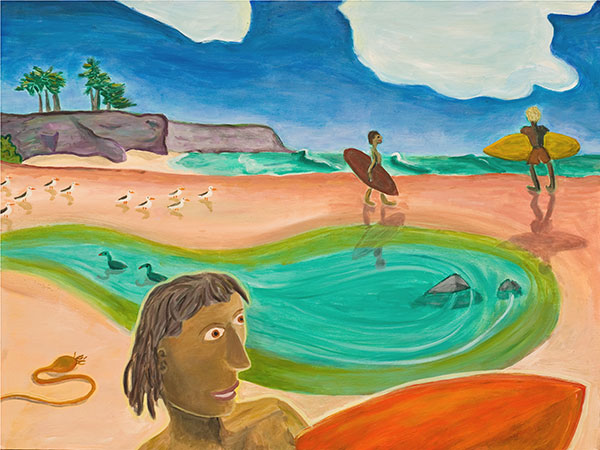
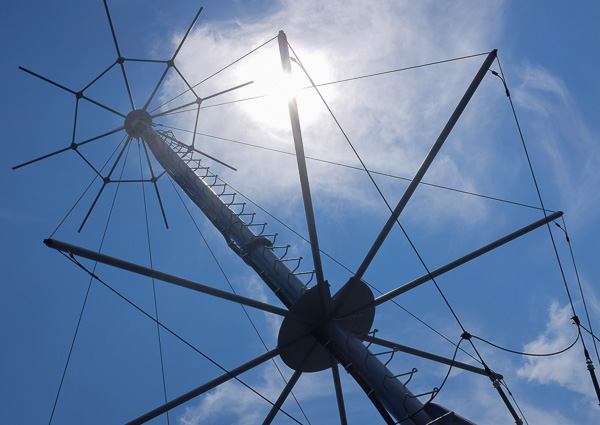
Surf Pilgrim
Pinchley produces his green spider, and the indefatigable tool critter spins out a pair of lines that Pinchley rolls into two coils, each with a spider-woven tow-handle on one end.
“Need foot straps, too,” says Villy.
Pinchley’s tire-making marker bird pops his head out of the tool-belt and coughs out four fine, padded foot straps with sticky, fractalized ends. Easily on par with the finest tow-board straps that Da Kine makes.
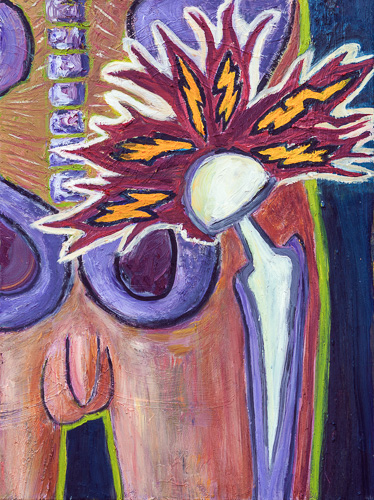
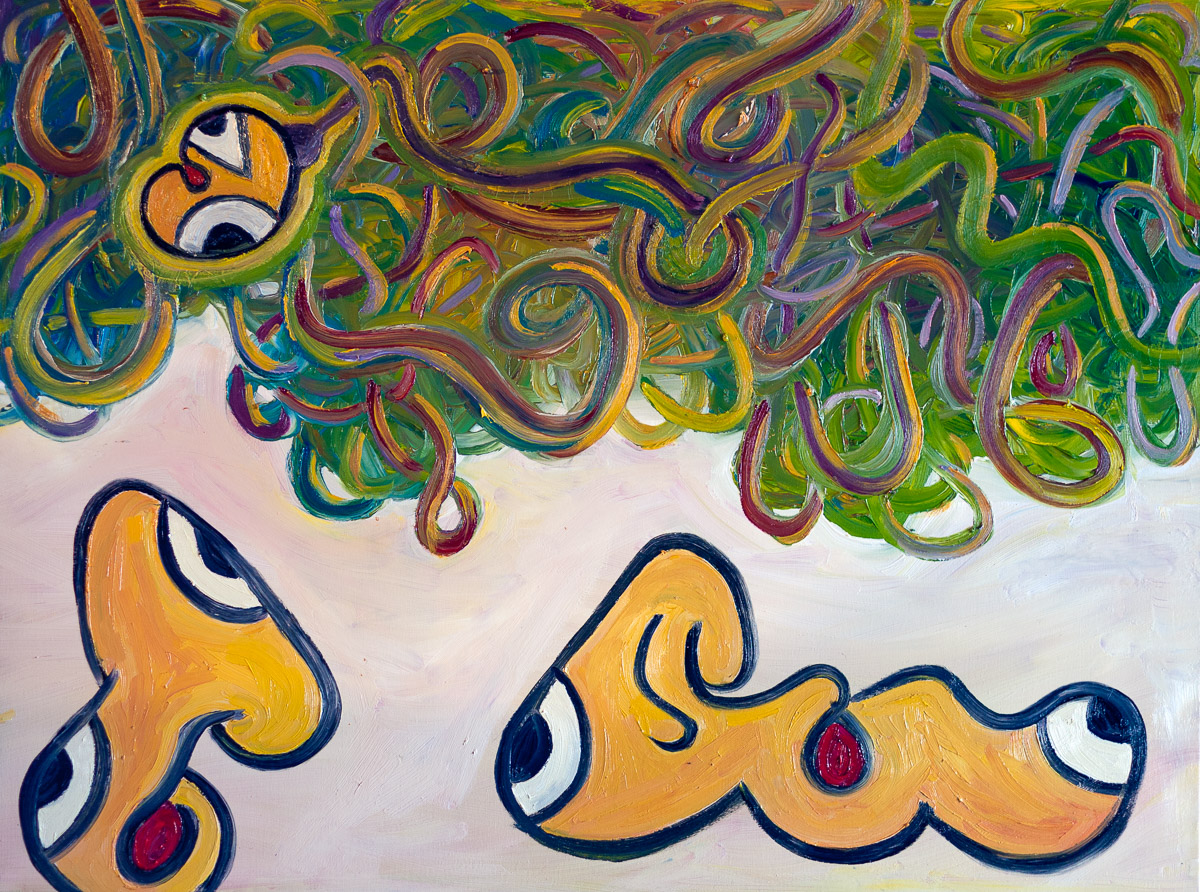
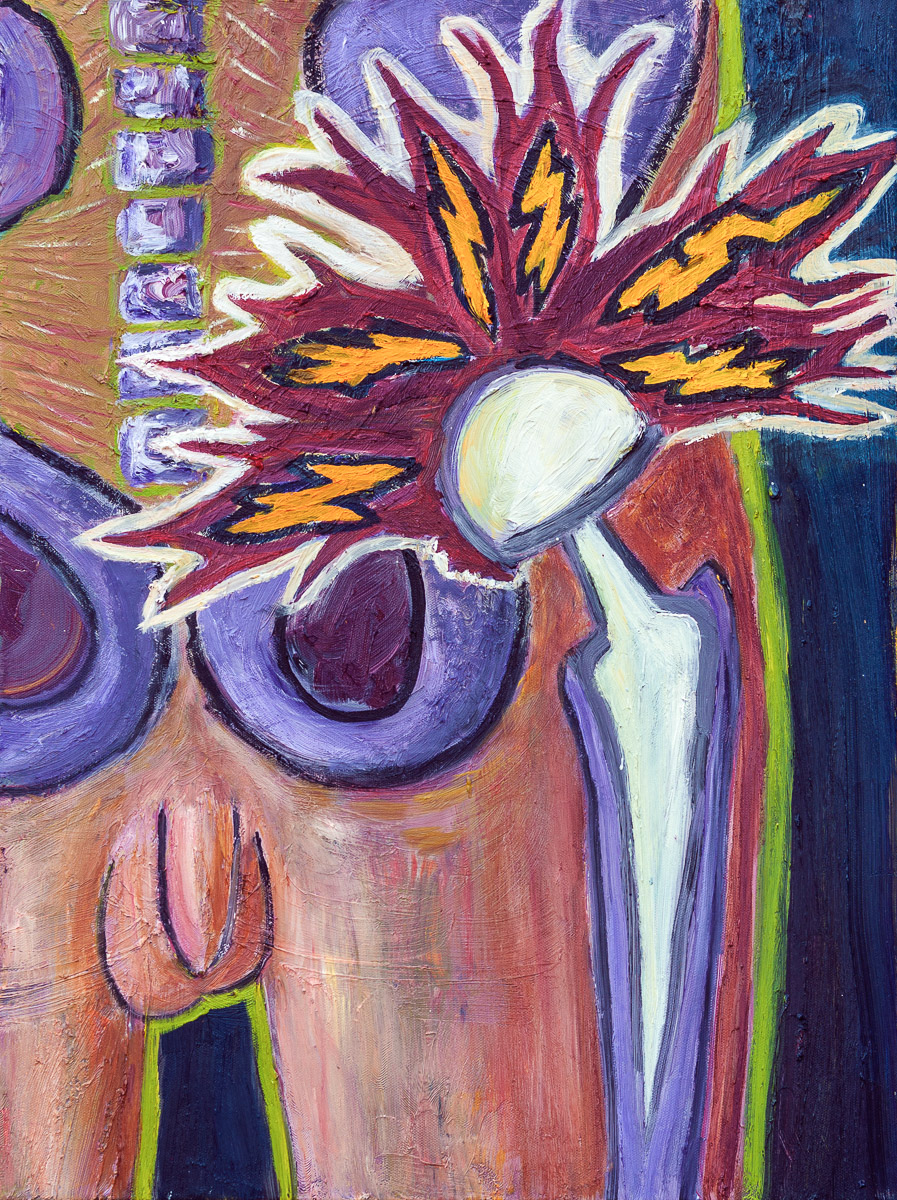
“Tree of Life” oil on canvas, February, 2015, 40” x 30”. Click for a larger version of the painting.
They’re coming up on the big waves very fast. The first one seems to fill the entire horizon. It’s moving away from them. But the long line of the corkscrew wave is faster. Up ahead of them, the corkscrew wave has already drilled through the great sheet. Like a tunnel in a cliff. The surfers will jump into the water before the wall-wave, and the car will ride the corkscrew through it.
“That wall leans backwards a little,” observes Villy. “Towards us. And the top leans forward. Like a long S.”
“Or like an integral sign,” says Scud.
“Oooo, math!” says Zoe in mock merriment that’s close to a scream.
“That integral wave is gonna to have a tube on the front,” says Villy. “Up at the top, where it curves over. We’ll shoot that tube, right Yampa? Mucho Goob-goob in there.”
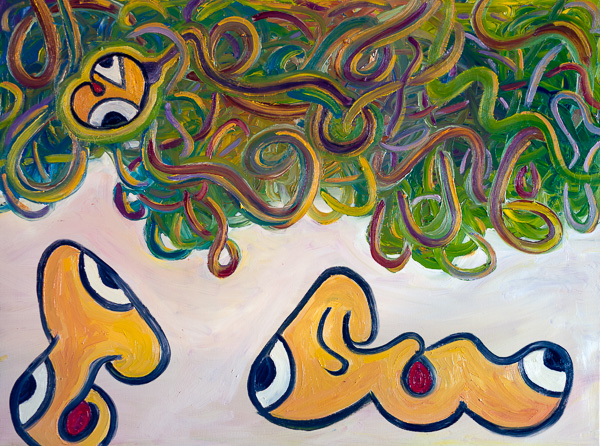
“Tree of Life” oil on canvas, February, 2015, 40” x 30”. Click for a larger version of the painting.
“Yah, mon.” Yampa tosses the two loops of spider rope over her shoulder and grabs the four foot straps with one of her complex hands. She gives Pinchley a hug and opens her window. With surprising nimbleness, she crawls onto the roof of the car. Meanwhile Zoe’s holding a steady course on the slope of the corkscrew wave. Only minutes till they pass through the wall wave’s base.
“So, uh, goodbye for now,” Villy tells Zoe. “Right before you punch through the wave, be sure to veer. So you, like, slingshot us?”
“You’ll fall right back off that big wave. It tilts the wrong way. You just said so.”
“It’ll have a flow to it,” says Villy, hoping this is true. “And a stickiness to it. It’ll lift us up. We’ll be like water-striders.”
“Don’t go.”
“It’ll work, Zoe. The waves are alive, Like Scud said. They want to play.”
“How will we find each other afterwards?” says Zoe, flicking her eyes back and forth between Villy and the wall-wave.
“No sweat,” says Pinchley. “Yampa and Villy ride the gigundo wobbler as far as they can. Zoe and the rest of us ride the corkscrew to shore. And we meet at the Flatsies’ village. Beach party.”
“I’ll be able to locate everyone with my teep,” says Scud.
“And if there’s a prob, the gingerbread men surf out and round us up,” says Pinchley. “The Flatsies are really slick on these smeely waves.”
Villy begins levering himself out his window. He takes one last look at Zoe. And he sees stark sorrow on her face.
“Hey,” says Villy softly. “I’m gonna shred. And then we’ll camp together again.”
“If only,” says Zoe. Her hair flutters in the wind. She fastens her eyes on his. “My dear Villy.”
Before he can properly answer, Yampa grabs his hand and yanks him onto the roof. She’s stronger than she looks. And more organized. She’s already attached the straps to the boards and she’s tied the two tow lines to the whale’s roof rack. The big wall is coming up fast.
Scud leans out the window for a last look at his brother. “Good luck,” he says.
Villy snugs his feet into his foot straps, grabs one of the spider-woven tow handles and—yeek—he hops off the tilting roof of the car.
He’s going so fast that the water hisses when he lands. He hunches and sways, finding his balance. And then he’s tobogganing down the steep, helical pitch of the corkscrew wave. He hears a shrill, exultant cry behind him. Yampa’s with him.
Even in this tense moment, the Surf World light makes everything look mellow. Nostalgic almost. Like the scene is something he’s remembering. Glancing down at his feet, Villy notices that a sizable teep slug has affixed itself to his ankle. An orange little nudibranch with a cluster of lavender feelers at one end. Fine. It’ll heighten his awareness.
The plan is to angle out to the side and hope Zoe can sling them onto the big wall. The supernal wave is making a creepy sound— a deep, endless roar, like the soundtrack in a horror film just before a hideous ghoul appears. Villy is definitely sensing teep from the waves. The corkscrew is purposeful, gleeful, happy about drilling through the immense wall. As for the wall itself—it’s chanting a single cosmic Om—or something like that—a sacred syllable with no beginning and no end. And under that is—not exactly contempt, no, it’s more like the wall-wave is mildly amused. Like a woman noticing two tiny ants on her nail-polished toe. Ants with nearly invisible antennae.
Focus, Villy! Hold the handle tight!
And just as he thinks that, zonng, the slack plays out and the tow rope is like a steel cable, with drops of water flying off it. Villy clings to the tow-bar for all he’s worth. It feels like it’s pulling his arms from his sockets
He catches a glimpse of Zoe’s pale, determined face glancing back at them from the car up ahead. He can’t wave, but he nods. Zoe puts the hammer down, she accelerates down the corkscrew’s slope, veering away from the corkscrew’s axis. In her wake, Villy and Yampa sluice up great fountains of water.
And now he surfers are at the edge of the helical wave—a sharp cusp, woven from a thousand flow lines. Villy bends his knees and jumps. Sails through the air for maybe a hundred yards, then slaps down and goes skimming across the eerily calm patch before the sky-high water wall. It’s not quite level, no, it’s sloping a little. Meanwhile, Zoe arcs further out from the corkscrew, then speeds back. Villy’s going faster than he thought possible. When to release the tow bar? All his thinking is in his arms and legs.
The moment comes and goes. Villy’s on his own. It’s hard to see, with the spray in his eyes, but the teep is helping. Come to me, says the mighty wave. Villy crouches low, cutting his wind resistance. He feels a rapid chatter of pulses from his board skimming across the washboard surface, and he hears the sound echoed from Yampa’s board. And then—thank you—they’re on the all but vertical face of the horror-movie Om wave and, yes, it has a flow to it, and they’re sticking to it, and it’s raising Villy up and up and up. Like a woman lifting a child.
Far below, Zoe and the purple whale disappear through the rumbling cliff of water.