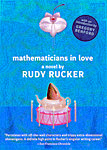
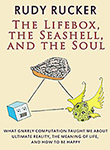
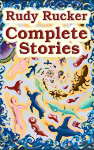
Click covers for info. Copyright (C) Rudy Rucker 2021.


Archive for the ‘Rudy’s Blog’ Category

LitPunk and Zickzack Tech

Sunday, March 1st, 2009

I was part of a reading called LitPunk last night, organized by John Shirley, whose image is posterized above. The reading was a mixed bag, as some of the readers weren’t so much writers as punk musicians or other kinds of SF undergrounders.

Rain Graves writes poems, often in a dark vein, she read some good stuff. Great name for a writer, too.

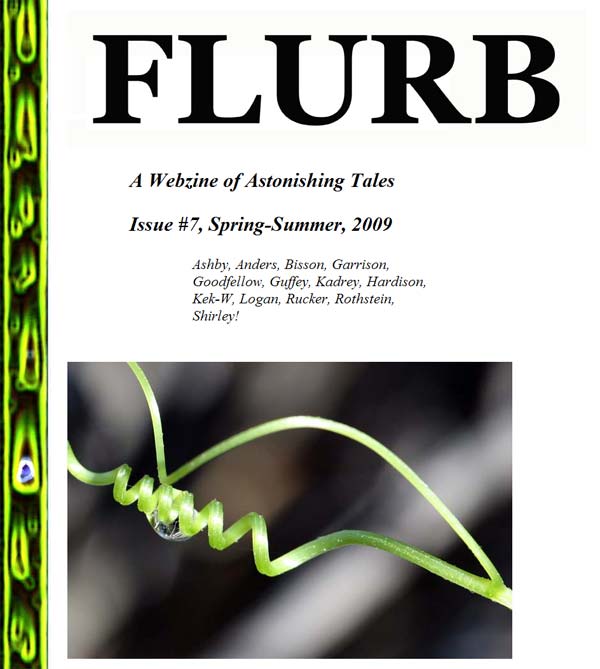
Charlie Jane Anders read a great psychedelic UFO story that may appear in the next Flurb.

This character Charles Gatewood mainly takes kinky photographs. He read a piece about having sex with one of his models, it reminded me of a letter to Hustler. I was, like, how have a I reached a point where I’m on a bill with Gatewood, when I’d once dreamed of reading for, like, the City Arts and Lecture Series? But he was fun to talk to, and I ended up buying one of his books on the street outside the nightclub.

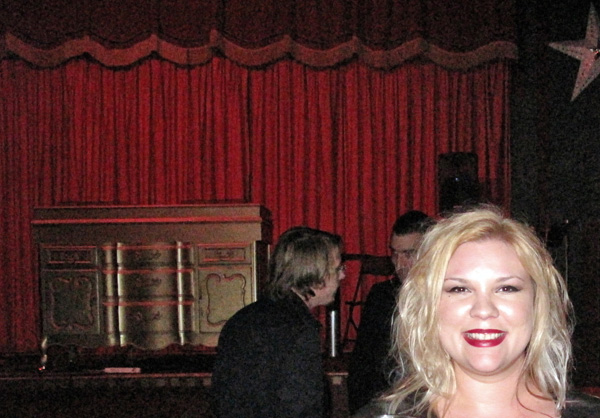
I didn’t shoot many photos, as I only brought my Canon G10, which doesn’t actually work all that well in low light conditions. Also I’m still learning to use it. This is Paul Mavrides wearing a t-shirt of his own design. I like how you can see a lot of other stuff in this picture too. I’m beginning to be intrigued by the photographic practice of including chaos instead of zooming on a detail—which is what I more commonly do.

I’ve been getting into the photographer Gary Winogrand this week, who often has cluttered frames, I’ll write more about him on some other day. Just this morning I put my old Leica 28mm lens on my Canon 5D to start playing with ways to fill up a frame. Winogrand shows us that, when shooting wide angle, it livens things up to go for a tilted frame.

Back to SF! I’m thinking about what kinds of technology I can build up just by folding and gluing little regions of space…this follows on the heels of my Zickzack blog entry.

Wall: Take a slab of space like a sheet of plywood and fold it so the back touches the front. And then anyone who runs through the slab bounces right back into themselves—so they stop. It’s a zickzack wall. It keeps out the rain and the bugs. Call it a helloby, short for “hello goodbye.” No, call it a zwall.

Furniture: You can use those zwall things in any shape, of course, so you can use them like lumber or like cushions. But how to make a zwall be soft? You could make a pillow-case-shaped zwall with air inside it, and it would be somewhat elastic, provided that you put wrinkles into the pillow-case zwalls. Or fill it with a bunch of smaller zwall pillows to get a foamy effect.


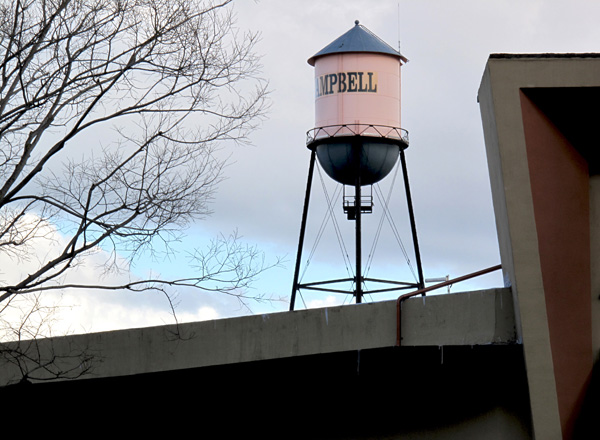
[I picked up my Gary Winogrand book at the great Recycle Bookstore at 241 E. Campbell Ave, in historic downtown Campbell, CA this week…I sold them a lot of signed author copies of my recent books, too, so go there if you want a bargain on a Rucker novel.]

Light bulb: A sunball is a ball with its outside connected to the inside of a ball that’s high up in space where it’s always sunny. You can make the light as intense as you like by making the input ball increasingly large relative to the input ball.

Weapon: An eatball is a similar to a sunball, but you throw the input ball at someone and it eats through them, spewing a fountain of guts from the output ball.

Fast Travel: Standard magic doors or space portals or hyperjumps. Step in here, come out there. Call it a spacebridge.

Slow Travel: I’d like something like a bicycle that moves me along at a nice brisk pace without the dislocation of a spacebridge. I’m thinking of…call them slideplates or, better, skids. I put skids on my shoe soles or on some little skis under a seat of a device called a skidder. The top of the skid is mapped to the bottom of the skid, which is consistently a certain distance ahead of the top. The greater the distance, the faster you move. How do you turn a skid on or off? Maybe you have a lever to warp the skid’s shape, making it more like a rectangle (motionless) or more like a parallelogram (moving).

Cloth: I could make a kind of quilt from two thin zwalls and fill it with fiber. But that’s crude. I’d like to see spinning and weaving, too. I suppose you could spin with a tapering tube that has an intrinsic rotation built into it. And for weaving you might have a woven region of space tubes, exactly congruent to the threads of the desired cloth, and your threads are pulled through this matrix by little skidders.

Cell: I think of a flat torus, that is, a cube which has each of its faces glued to the opposite face. How does a cell like this interact with the surrounding space? In a way, it seems to be essentially cut off, like a torus floating beside a plane. So it disappears? But a spacebridge can get you into it. Or what if I wrap the cell up in normal space. It’s like the hollow liner of a Thermos bottle. You could use this as insulation.

One last thing on my mind. More and more gas pumps in the Bay Area have horrible noisy TV screens on the top spouting advertising and government propaganda. I’ve always thought of filling up my car as a meditative time, a little break in the day’s rush, and now the greedheads are putting a disgusting mind-scrambling ad stream in my face. It’s a safety hazard, even, in that it’s hard to concentrate on the task of filling the car without spilling gas.

Is there any hope of banning gas pump TVs? If not…how might one best sabotage them?

Not that every form of screen art is bad. See, to wit, this wonderful 1947 Donald Duck cartoon on YouTube, “The Plastics Inventor,” which Paul DiFilippo hipped me to.

Zickzack, or, Hyperdimensional Origami

Thursday, February 26th, 2009

I should mention that on Saturday night, Feb 27, I'll join the LitPunk reading at the MakeOut room in the Mission in SF, in a show running 7:30-9:30...I'll only be reading for about five minutes, but the whole lineup looks good. LitPunk info link.
***
I would like to have some very different kind of technology in this alternate world Flimsy that I’m writing about, or something that’s not even like technology at all. Various kinds of—empowerment. In other words, the flims (that is, the residents of Flimsy) are empowered by something other than the kinds of machines that we have, or they’re using machines in a different kind of way.
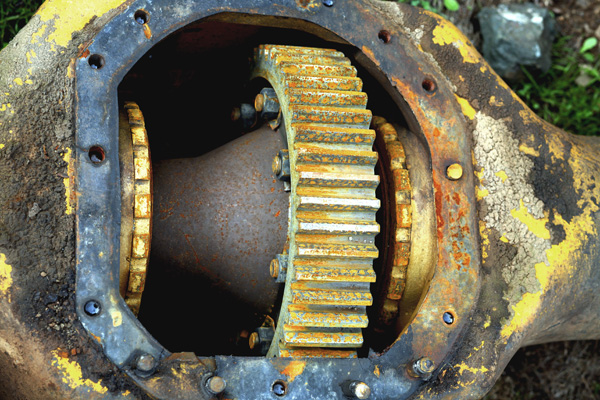
Making this fresh is a demanding problem, as I’ve written about alternately-empowered worlds before, and I don’t want to repeat myself. I’ll list a series of empowerments that I’ve used: junkpile, biotech, nanomachines, transmutation, vaaring, matter holograms, and psi powers. And then I’ll talk about a new approach that I’ll call zickzack, or hyperdimensional origami

A constraint is that I want to keep the jivas on the scene, which are things like flying jellyfish, possibly alien beings, possible spirits, whatever works. And I’d like to keep the vibe of the flims as being like sprites, elves and goblins, even if they have to be, like, DMT elves living in an intense urban fantasy.


[Unused cover design for Freestyle zine #3, 1989.]

Junkpile. A old-school SF future scenario posits a kind of ultimate New Jersey, crowded with tech junk, but without any truly paradigm-shattering changes. I think of Max Headroom, cyberpunk, Bladerunner, like that. I kind of had this approach in my first novel Spacetime Donuts, and in Software.
Biotech. On the Earth of 3003 in Frek and the Elixir, people use biotech instead of machines. They have, like, house trees and knife plants and transporter beetles—every little object you’d want is grown by some kind of plant and any task can be done by a specialized animal. And I briefly mentioned this scenario in Saucer Wisdom as well. I first read about the notion in some forgotten SF novel or story when I was in high school—I specifically remember reading about a seed for a house, and plant that grew knives.
Nanomachines. We can imagine docile nanomachines that build whatever we want, like the “utility fog” sometimes discussed, or like smart sand. I did something in Frek and the Elixira little like this, with tiny living polyps building a house like a reef—but here we’re talking about molecular-sized machines. I did have nanomachines in Postsingular—first the nants, and then the orphids—although in those books the nanomachines weren’t actually building stuff. And I don’t really want to have these nant-like things in Flimsy because then right away we have to worry about them coming over and eating our world, which is a problem I already used for a plot in Postsingular.

Transmutation. This variation of direct matter control appears in Realware, , and was sketched in Saucer Wisdom as well. Here people have devices called allas which can create any object they want by transmuting input atoms into the desired output atoms (using quark-flipping), and by then arranging the atoms into the target object. It’s like programming matter.
Vaaring. In Frek and the Elixir, they travel to a planet called Unipusk, where some of the locals are “kenny-crafters” who can “vaar.” Vaaring is like transmutation, but more far-fetched. Vaar is used in two related senses. The first type of vaaring is the process of turning invisible dark matter (kenner) into a visible substance. The second type of vaaring is the process of forming the kenner-derived matter into some specific shape or device—these objects are called kennies. Functionally, vaaring is pretty much like using a magic wand, as is transmutation.
Matter holograms. In Hylozoic, the Peng alter the quantum computations of matter so that the atoms send out matter waves that interact to form objects called tulpas. To some extent you could do without tech if you could make tulpas at will—it’s a bit like transmutation or vaaring, although the resulting tulpas don’t have the stability of a kenny or an alla-made object.

Psi powers. The humans in Hylozoic use teleportation to get around, telepathy to communicate, and they assemble some things by teleporting objects. They can also teep into objects (which have rudimentary minds) and encourage the objects to behave in certain ways. This cuts down on their need for tech devices.

Hyperdimensional Origami. Suppose that the jivas use a type of dimensional mastery to make things for the flims. In a buzzword sense, I explain the gimmick as hyperdimensional origami. Regions of space fold and alter to become tunnels, houses, whatever. It’s not psi, it’s not nanotech, it’s not matter holograms, it’s not vaaring or transmutation—but it’s almost as good as having any of those. I still need to work out a few details though!
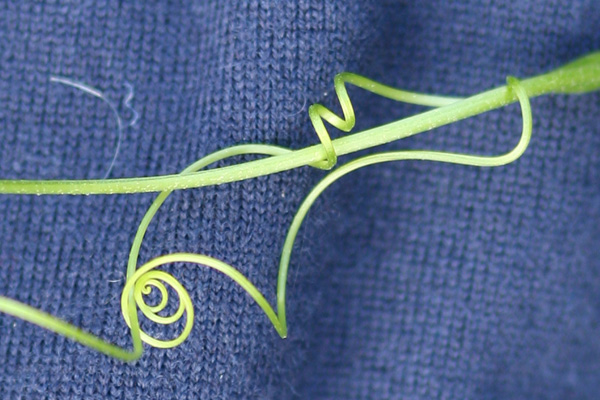
Okay, so I want to start thinking about “hyperdimensional origami,” but I need a shorter name for this empowerment.

Flip, twist, twizzle, tweak, zickzack…I like zickzack. Like an onomatopoeic sound indicating something changing very fast, like in a fairy tale. I see zickzack as a verb, adjective, or as different kinds of noun.

“The jiva zickzacked the space beside my feet, creating a shimmery flight of stairs.” “I entered a zickzack door.” “What’s this I’m wearing? It’s a zickzack.” “The jivas have the power of zickzack.”

And, yeah, the jivas do the zickzacking. This in the SF tradition of giving people access to some incomprehensible alien devices owned by alien allies—or alien masters. Normal human tech has withered away in Flimsy, or maybe it never even emerged, if we suppose that the jivas have been around for a really long time.


Hylozoic Writing Notes. Literary Archive.

Wednesday, February 25th, 2009

I made a Hylozoic website for my forthcoming novel today—it’ll be out at the start of June, but you can pre-order copies now from the Hylozoic site if you want to (which is a good thing for me, as it sends a signal to Tor that people want to read the book.)

A more compelling reason to visit the Hylozic site at this point is that it contains a link for my “Writing Notes for Hylozoic,” which is a whopping 4.3 Meg PDF file, containing a 385 page single-spaced (but nicely formatted) document with the working notes for the book. I have numerous images in the document, as well and internal and external hyperlinks. It’s really a book in itself, about 190,000 words long…which is over twice the length of the actual novel.

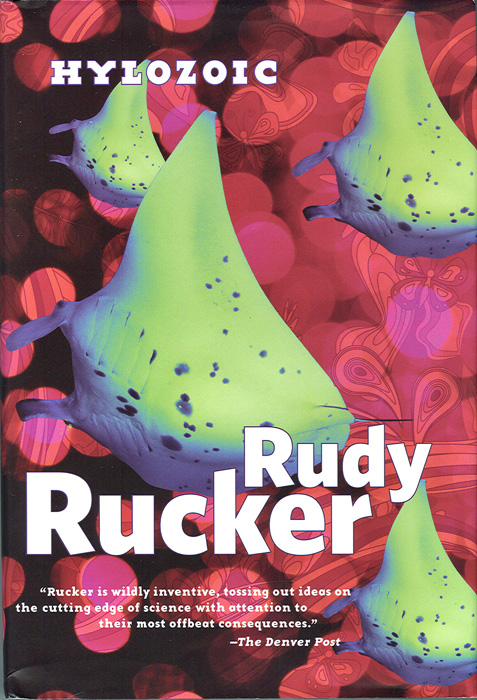
I recently got this preliminary image of the Hylozoic cover from Tor. It’s quite beautiful. For a second I didn’t realize that those blue things are images of a manta ray, but, yeah, there they are, the Hrull, not exactly as I’d depict them myself, but nice to see.

They might still drop the “Sequel to Postsingular” line from the Hylozoic cover, as that kind of phrase could be off-putting for a reader who hasn’t read Postsingular. And, I would argue, one could perfectly well read Hylozoic on its own, or before Postsingular.

I was initially surprised that the font of the Hylozoic book title was so small, but, looking back, I see that the title was even smaller on the Postsingular cover. In any case, I’m proud that my name is printed large, which indicates that my “brand” has become a good selling point. And thank god for good old Bill Gibson’s solid-gold blurb. And for the Tor art department. These are some of the best covers I’ve ever had.

Farewell, Postsingular and Hylozoic. I liked this world a lot, maybe I’ll be back some day.

But right now, having finished the initial version of my memoir, Nested Scrolls, I’m busy with my next SF novel, Jim and the Flims

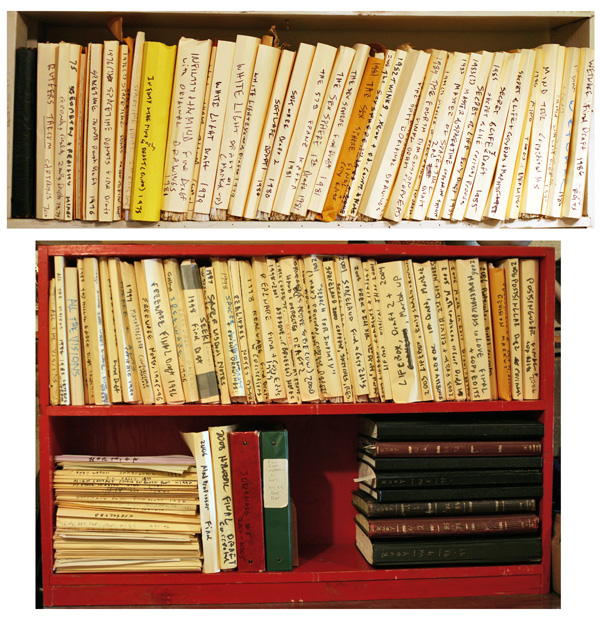
Well, actually, I’m not working on Jim and the Flims this week, instead I’m rooting around in my basement organizing my literary archive. It’s been a cockroach-in-his-nest kind of activity for these rainy winter days.

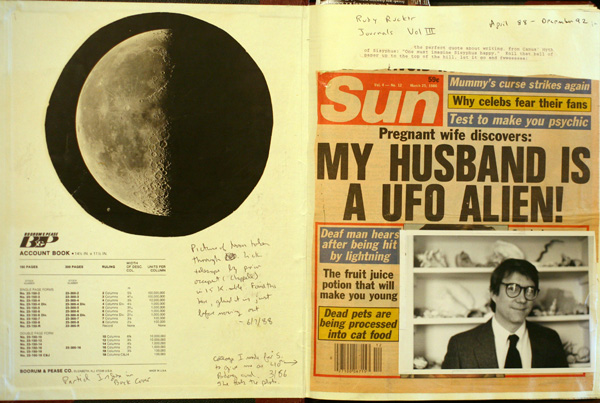
It’s weird looking at the three bookshelves of my old writing notes, journals, and book drafts. A life’s work, a vine twining around time’s tree. I’ve been lucky.

Conceivably I could sell the archive. As I understand it, the way this works is that you get someone to pay you a substantial sum for your archive, and then they donate it to a university library and they thereby do a public service and get a tax break. Of course, I might get a better deal if I was dead.

Oddly, enough, if the writer him or herself donates the archive while alive, he or she can’t take a tax break—Congress passed this law in fury after Nixon got a $19 million tax deduction for donating his papers to the Yorba Linda Nixon Library! Good old Nixon…

Self-Publishing. Four Mile Beach.

Friday, February 20th, 2009

It rained about five inches last week—what we call a storm in California. I love to see water do its thing. So much beauty, all there for free, gone in a moment.

I have a couple of new links today. My young friend Brendan Byrne has started an ezine called The Orphan with a couple of his pals. It’s a zine for fragmentary stories or articles that are somehow fated never to see formal publication. I contributed a piece called “Catalog Notes for the Secession,” involving some catalog copy that an artist asked me to write for him…and then changed his mind about using.

My other link is to an interview with me on a website called Self-Publishing Review. I did self-publish my art book Better Worlds last month. And with POD (print on demand) and ebooks coming on stronger all the time, you really have to wonder what publishing really means anymore.

You can read my interview at that site, but I will quote one riff here that I thought was funny. I wrote this in the context of me discussing why you’d bother to use a publisher at all if, at some future time, all a publisher was going to do was to produce POD and ebook versions of your work—as opposed to distributing paper copies in bulk. Even though you can do this yourself, a publisher can still provide an advance and a modicum of promotion.

Re: promotion, for mid-list writers like me, promotional media advertising isn’t really a factor. My publishers mention each of my novels in a multi-book ad in the SF trade zine Locus, and that’s about it. But they do send out review copies. Of course a self-publisher can send out ebook review copies for no cost—but this is really a mass spam ad. And reviewers are, of necessity, adept at ignoring spam. Having a commercial publisher lends credibility. That is, if my book comes out under the aegis of a familiar publisher, people feel assured that the work is of professional quality—as opposed to being the maunderings of a senile madman.

Would that work as a memoir title? The Maunderings of a Senile Madman. No, no, that wouldn’t be a wise move.

Something I didn’t explicitly say in my interview, by the way, is that blogging is, in and of itself, already a form of self-publishing. Maybe we’re going to slowly let go of the notion that to “publish” something is to have it pass through the hands of an office in a skyscraper in a big city. Maybe publishing doesn’t really have an unbreakable connection with commerce. Maybe it’s like rain, your words and images pelting down on the world, sending out their little circles and fading away.

Oh, one other thing I forgot to mention in my interview is that it costs nothing, that is $0, to make your book available in POD on Lulu…they make their money by taking a small cut of each POD copy they sell. For $100, Lulu will get you an official book barcode and have the book listed on Amazon…but I think you can actually to this yourself for less. The point is: self-publishers no longer need to hand over thousands or tens of thousands of dollars to predatory vanity presses…even though there are POD publishers who still try to follow the old vanity press model of selling their authors multiple “editing, distribution, and promotion” packages.

I finished my lastest painting, Four Mile Beach. Painting number 50! I was out there en plein air on the last day before the storm moved in. The waves came out well—I did that part in under an hour, right there on the beach. I reworked the cliffs and rocks at home. I like this picture a lot. Sometimes the easy ones are the best. Click here to see a larger version of this painting.


Rudy's Blog is powered by WordPress