


Click covers for info. Copyright (C) Rudy Rucker 2021.


Archive for the ‘Rudy’s Blog’ Category

Wolfram’s Teachings. Natural Language.

Friday, November 26th, 2010

I’m thinking about the mathematician/computer-scientist/physicist Stephen Wolfram today, as his company just released version 8 of the Mathematica program, a multi-faceted mathematics-helper program; it simplifies and solves algebraid equations and generates very nice graphs, among otheg things. Wolfram’s latest wrinkle is that Mathematica now (to some extent) understands natural language. So you can ask it, for instance, to draw something for you without having to use the precise Mathematica-language symbolism. Wolfram has a blog post about this, “The Free-Form Linguistics Revolution in Mathematica.”


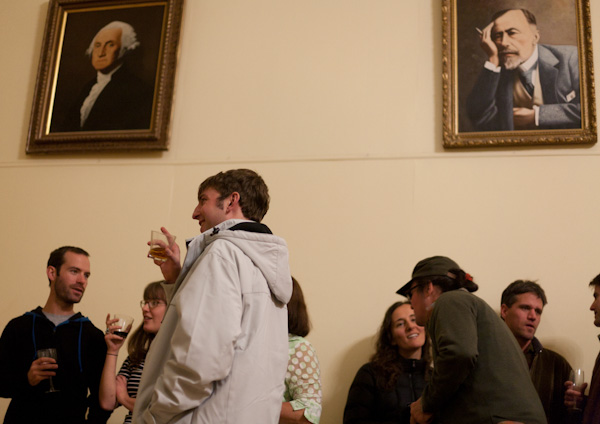
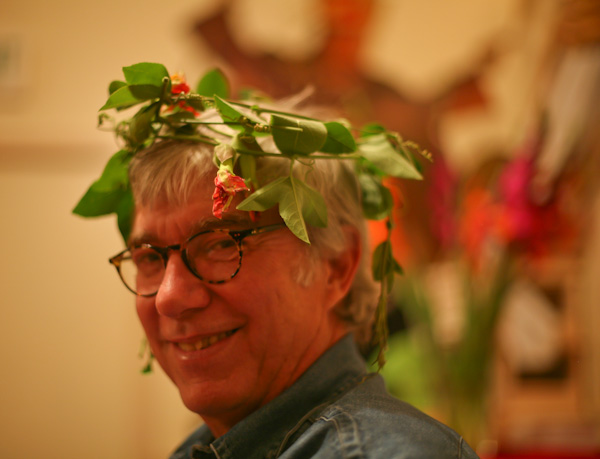
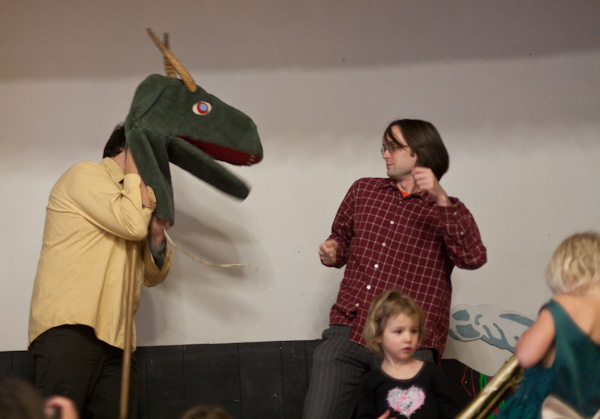
[Some of today’s photos are partly drawn from a large Thanksgiving Day gathering we went to in the Mission yesterday, organized in part by my son Rudy.]

Over the years, Wolfram’s had a huge influence on my thinking. Indeed, my 2006 tome, The Lifebox, the Seashell and the Soul was to a large extent inspired by Wolfram’s even fatter 2002 book, A New Kind of Science

As the years go by, I’m a little surprised by how slowly our new ideas seem to be sinking in. It’s as if people never will understand that a deterministic system can be unpredictable, and that computer science has pretty well established this as empirical fact. Or that natural systems in particular, being computation universal, are inherently unpredictable. So the media is always furiously casting about for the proximate cause of the latest disaster.

Re. my impatience, Wolfram recently emailed, “It will come. But I think the bigger the concepts, the longer the time needed for humans to absorb. So we’re mostly just learning that these are in fact big concepts (even though to you and me they now seem pretty obvious)…”

For today’s post, I thought I’d summarize Wolfram’s tenets once again, drawing on a version that I recently wrote up for my forthcoming autobiography, Nested Scrolls: A Writer’s Life. The context of this passage is that I’m recalling my mixed success in proselytizing Wolfram’s teachings, as presented in his New Kind of Science book. Some audiences had been actively hostile.

First of all, Wolfram was arguing that we can think of any natural process as a computation, that is, you can see anything as a deterministic procedure that works out the consequences of some initial conditions. Fine. Instead of saying the world is made of atoms or of curved space or of natural laws, let’s see what happens if we say it’s made of computations. This notion gets some people’s goat, but if you’ve hung around computers a lot, it seems semi-reasonable.

Secondly, Wolfram made the point that, by studying cellular automata, he’d learned that there are basically three kinds of computations. The simple ones peter out or repeat themselves. The pseudorandom ones generate a seething mess. And the interesting computations lie in between. They generate patterns that seem to have some kind of structure to them, but they don’t repeat themselves or turn boring.

This second idea is simply a taxonomic observation about the kinds of things we find in the world. The in-between computations are akin to what we might earlier have called chaotic processes. I myself came to call them “gnarly computations.” So, if everything is to be a computation, then pretty much all of the interesting patterns in nature and biology are gnarly computations. Fine.

Thirdly, Wolfram argued that all gnarly computations are in some sense equally powerful, that is, given enough time and space, any given gnarly computation can in fact emulate any of the others. If everything is an equally-powerful computation, then we’re all in some sense the same.

Note that a computer doesn’t have to be made of wires and silicon chips in a box. A cloud can emulate an oak tree, a flickering flame can model a human mind, a dripping faucet can behave like the stock market. And we’re not talking about vague, metaphorical resemblances here, we’re talking about mathematically precise bit-for-bit representations. (I wrote about this idea in my recent pair of novels Postsingular and Hylozoic.)

For someone who’d become as steeped in computer science as I had, this third point also seemed reasonable, but outsiders had trouble making sense of it—and in their confusion, many of them grew angry.

Fourthly, Wolfram said that gnarly computations are unpredictable in the specific sense that there are no quick short-cut methods for finding out what these kinds of computations will do. The only way, for instance, to really find out what the weather is going to be like tomorrow is to wait twenty-four hours and see. The only way for me to find out what I’m going to put into the final paragraph-sized “scroll” of Nested Scrolls is to finish writing the book.

Wolfram’s fourth point is very nearly provable on the basis of some well-known theorems from computer science but, again, many scientists don’t like it. They still subscribe to the pipedream of finding some magical tiny theory that will allow them to make quick pencil-and-paper calculations about every aspect of the future. They haven’t taken to heart the essentially chaotic nature of the world. We can’t control; we can’t predict—but even so we can hope to ride the waves.

Four Mile Beach, Reunion, Lightroom

Tuesday, November 23rd, 2010

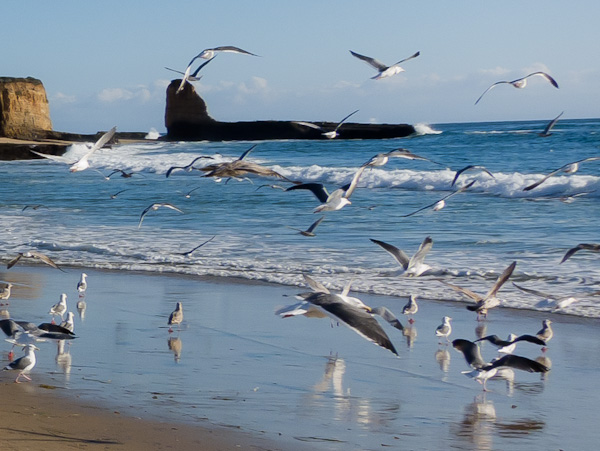
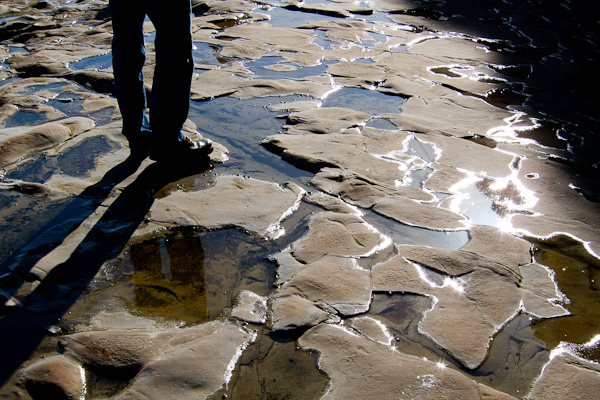
We were out at Four Mile Beach north of Santa Cruz yesterday with my big brother, Embry.

I shot some nice photos, using my pocket Canon S90 in RAW mode, and editing the RAW images in Adobe Lightroom. The camera’s RAW images have 14 bits per pixel instead of the default 8 that JPGs have, that is, so RAW images have, I guess, sixty-four times as many possible shades per pixel, which helps, especially in recovering stuff from underexposed or blown-out areas.

This is an interesting shot of scattering gulls, although weakened by being a detail of a larger shot. This is where having your four-pound SLR along could kick it up a notch. But I don’t geek it that hard most days. A flock of maybe a thousand gulls were sitting on the beach, all their little stick legs parallel lines above the sand. Caw, skirl, skree.

I’m still getting used to using Lightroom, it’s a different paradigm than I’m accustomed to with my old Photoshop workflow. In Lightroom now, I shoot in RAW mode, save this as a “digital negative,” or “DNG,” then tweak this image as much as I like in Lightroom, which has a very nice “Developer” module. The original bytes are unchanged, but you see previews of the tweaked image in Lightroom and you can export 16-bit TIFF or 8-bit JPG files as if you were making “prints” from the digital negative.

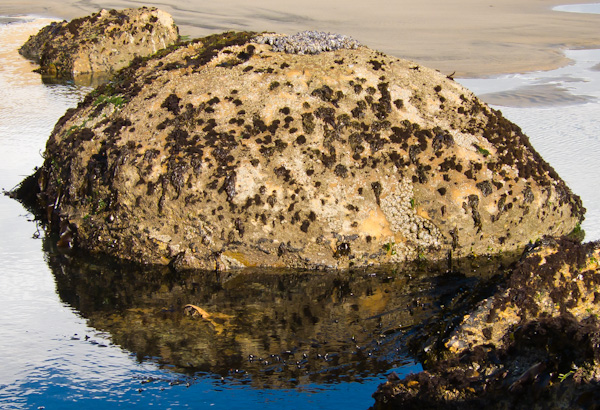
Here’s your Thanksgiving turkey with barnacle garnish.

Certain of the more heavy-duty Photoshop tweak tools aren’t available in Lightroom, so once in a while I might export a TIFF and do a further tweak in Photoshop. But this isn’t happening as often as I thought it would. I can pretty much live in Lightroom now.

I love Four Mile Beach, it’s a favorite spot, usually fairly uncrowded. On big wave days you’ll see a lot of surfers—the surfers are generally friendly or indifferent to mere beach walkers.

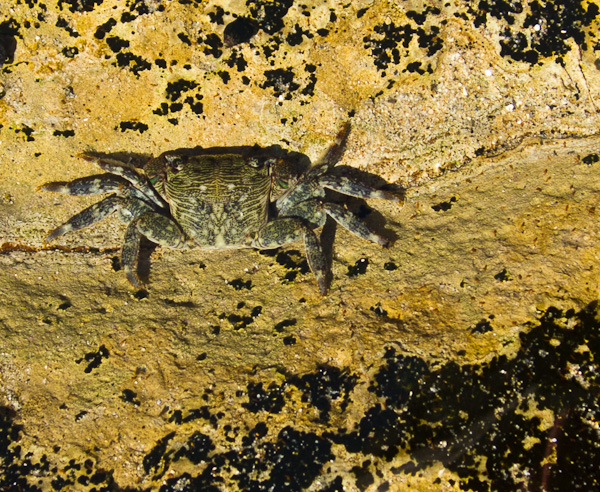
Embry spotted this cute little crab. For crustacean-ovores: the big California Dungeness crabs are in the supermarkets now, we got a bunch of them for a family dinner the other night. Really good.

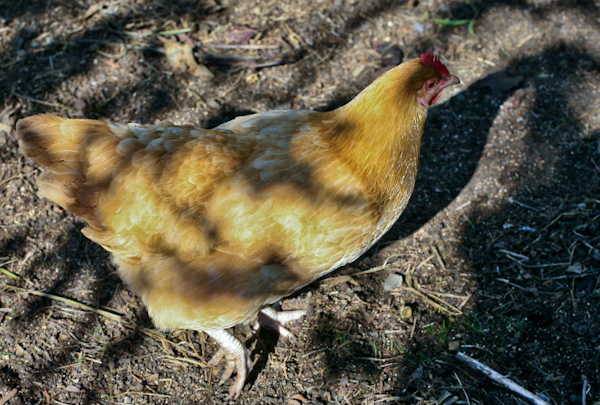
My son’s chickens are a little uneasy these days, but they’re safe. It’s great so see the granddaughters collecting their eggs.

My father, the first of the four Embry Cobb Ruckers, loved William Saroyan’s book, The Human Comedy, and often quoted from a passage where a four-year-old boy finds a fresh-laid egg. “He looked at it a moment, picked it up, brought it to his mother and very carefully handed it to her, by which he meant what no man can guess and no child can remember to tell.”

The years flow by; the holidays come at us like tracer bullets. We advance towards the dark. And sometimes it’s still sunny.

3 AM Interview. Sex Like A Slug.

Thursday, November 18th, 2010

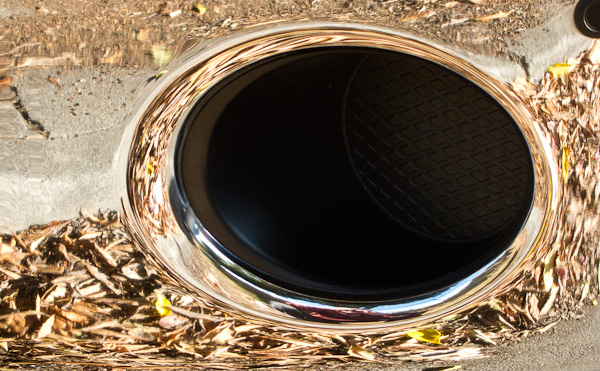
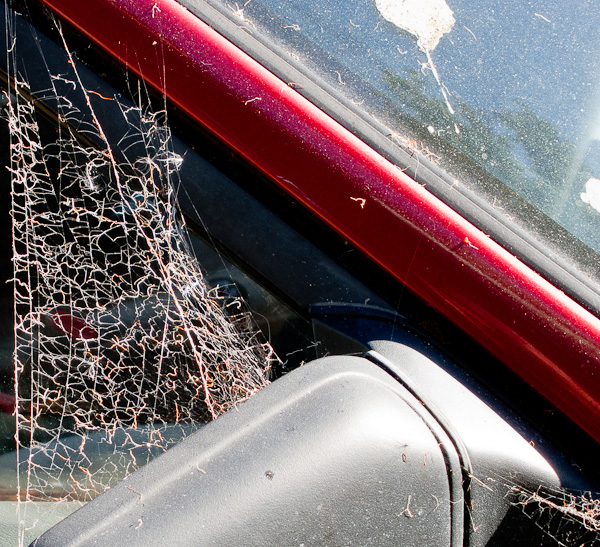
Isn’t this a cool image? It’s a chrome bumper on a truck in Bezerkistan.

There’s a nice email interview with me by Maxi Kim in the 3 AM webzine. They found some links to videos of my talks that I’d never seen.

Did I show you my Halloween pumpkin yet? He didn’t live long, his skull rotted out very quickly. Lovely sick juice ooze out.

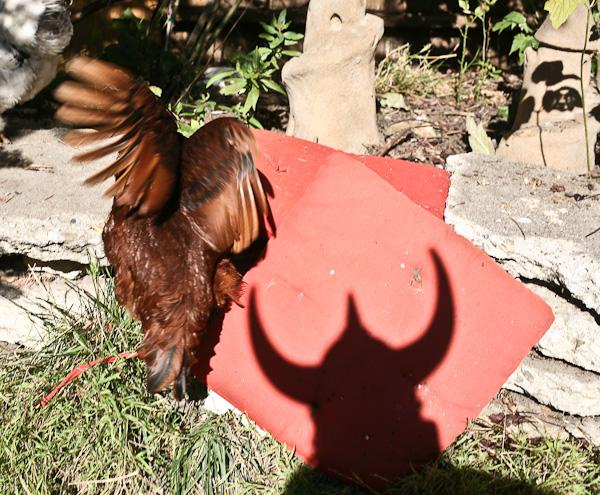
This show shows the shadow of a Viking warrior stalking a hen for Thanksgiving dinner. “The goose hangs high” means, some say, that the fowl is hung, dead, outside for several days to ripen and soften until it’s smell is — high.

“Have you bathed lately?” “I’m high on life.”

I used to think it was a good idea to go to Death Valley, but after my last visit, in September, I’m kind of over it. Well, it’s nicer in the spring.

Following a suggestion by my loyal reader “Alex,” I read a little of Iain M. Bank’s first SF novel, Concerning Phlebas, which has a shapeshifter or “Changer” as a character. In this novel, the shapeshifting is quite slow; it takes several days, like a process of biological growth. But I’m going to want the shapeshifting to be fast, like for Plasticman. Something that I can use from Concerning Phlebas is that a shapeshifter needs to focus fairly steadily on their desired form. I like that idea.


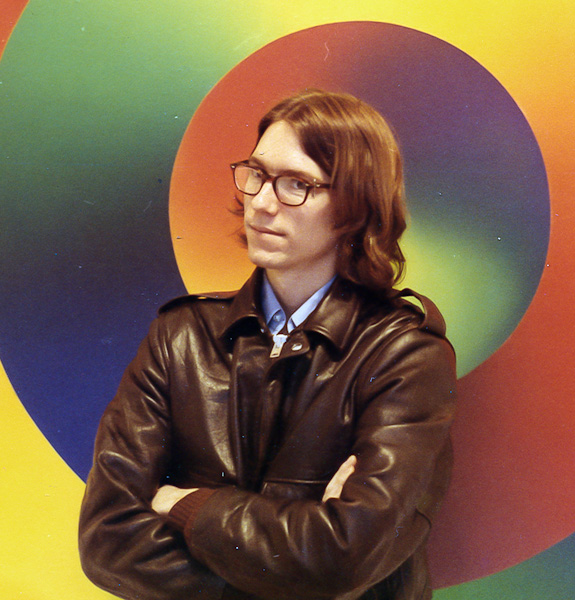
[Rudy in grad school, 1971]

Since my fictional character Alan Turing’s norm is to change shape very rapidly, it could be that any sudden shock can distract Alan from maintaining, say, his Abby shape, and he could then revert to his default Alan shape with the abruptness of a Zeeman catastrophe machine settling into a new minimal energy configuration. By the way, a reader named Mike Hoskins sent me a link to an image of a 1946 letter where Turing talks about his ACE computer’s ability to function as a universal emulator.

Thinking of the next scene now. Neddy Strunk, who’s become a shapeshifter too, slimes up the wall of the Burroughs house, and into Alan’s second-story room. Alan is backing off. Neddy takes on his Strunk look, and Alan is, like, oh no. Seeing this, Neddy has the idea of taking on a crude approximation of Vassar’s appearance, Vassar being a man whom Alan is hot for. He embraces Alan and, almost against his own will, Alan finds himself slipping into the female Abby shape that he’s been using to get it on with Vassar. Soft mood music.

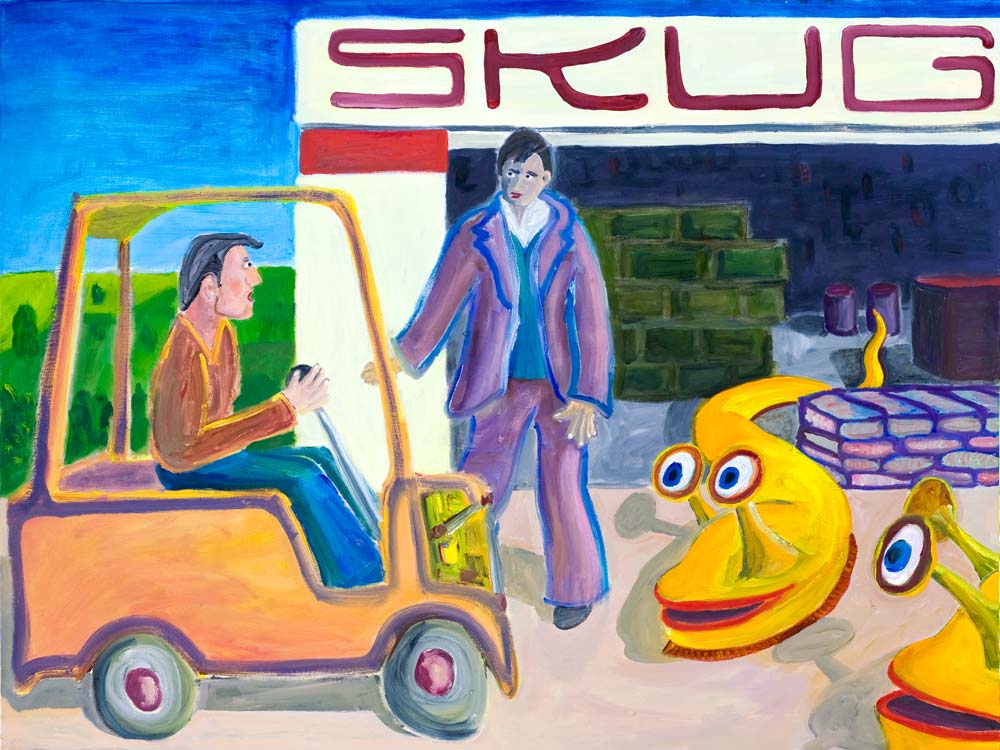
They’re screwing, but it’s more than that, it’s skug conjugation. They’re exchanging cytoplasm. On an impulse, Alan shoots a tendril *thwap* upwards to stick to the ceiling of the Burroughs guest bedroom, and Neddy does the same. They dangle in the air, slowly twisting, like a pair of mating hermaphroditic slugs (check out the video if you’ve never seen it, this one complete with plummy Brit narration). And that’s when Mrs. Burroughs and young Billy Jr. walk in on them.

The wild thing is—after this sight, mother Laura still thinks that this is her son William Burroughs, even though it’s Alan in the Abby shape deformed into a dangling skug. I mean, that’s the kind of guy that Bill is, right? He does this kind of stuff. Laura Lee throws him out of the house.

Wild West #10. Canyon du Chelly, Peyote.

Monday, November 15th, 2010

One last post of photos from our September roadtrip through the Wild West. After Monument Valley, we headed south to Canyon de Chelly, pronounced like Canyon du Shay. You can find links to the complete set of Wild West posts here.

Canyon de Chelly is what you might call a box canyon, in that you can walk or drive in from the lower, open end, and its about a thousand feet deep at the upper end, which is maybe twenty miles in.

Unlike the kind of canyon that has a river in a rocky gorge at the bottom, the Canyon de Chelly is fairly flat at the bottom; it floods every year, and there’s a smooth later of rich soil. People have lived and farmed in there for a very long time—in fact this may be the oldest continuously inhabited spot in the US.

The present inhabitants tend to move out during the spring months when it floods, but in the old times, the natives dealt with this by putting their homes in big cracks of the sheer cliffs.

We stayed at the nearby Thunderbird Lodge—a nice thick-walled motel built around a former trading post. The Lodge runs tours into the canyon, but they didn’t look too comfortable; you sit in a chair on the back of a large flatbed truck with no shade. For about the same price, we got a Navaho guide to take us on a jeep tour, just her and Sylvia and me.

She was a lively, talkative sort, and told a lot of interesting things. She’d been off the rez for many years, but was back now, and living with the Navajo owner of the small tour company.

The canyon reminded me very much of the fictional “Hormiga Canyon” that I wrote about in 2007 with Bruce Sterling in 2007. This story made the cover of Asimov’s SF Magazine, even though the text itself isn’t online. I told the guide a little about the story, and said I was hoping we might come across some giant ants. She appreciated the idea.

As we got deeper into the canyon, it started feeling ever-heavier and more spiritual. As we looked at the ruins of some cliff-dwellings, a big raven coasted past. It was so quiet in the canyon that I could hear the air on the feathers of his wings.

I’d heard that the Navajos are still into taking peyote, and I asked our guide about it. She said, yes, it was common, more among the men, and that the man she lived with was in fact a psychic guide, what they call a peyote road man. There’s even a legal exemption that allows Navajos to possess and use peyote, based on membership in the Oklevueha Native American Church.

Our guide mentioned that they have go down to Texas in order to get the peyote, which grows wild along the banks of the Rio Grande River, and this can be problematic, as the legal exemption isn’t necessarily honored by the Texas state authorities.

This all reminded me of the fall of 1965—forty-five years earlier—when I myself had taken peyote. I mentioned this to our guide, but she didn’t want to have that conversation.

The sun was setting as we drove back out the mouth of the Canyon de Chelly. Some wild dogs appeared by the jeep barking at us. The guide said, “I’ve never seen those guys before.” The sun was shining into my eyes, lighting up the crannies of my brain.

“This has been great,” I said. “We saw the giant ants, the dwellings of the Old Ones, the Magic Raven, and the Secret Dog Guardians are ushering us out!” She laughed. It was an amazing trip.

Rooting around today as I make this blog post, I found the manuscript of a memoir I wrote in 1983, All the Visions, typing it in a continuous session in one giant paragraph on an eighty-foot-long roll of paper. The book appeared from a small press in 1991, and is still available on Amazon, mostly in used editions. I might do an e-book release of it sometime this year. Anyway, here’s an excerpt of the parts about my peyote trip in 1965, when I was a junior at Swarthmore College.

This upperclassman Freddy had these round steel-rimmed glasses, and always an unbuttoned button-down collar shirt with the sleeves rolled high up over his elbows, the elbows jerking out to the sides make room, make room, chuckling and working on incomprehensible letters to like the FBI to leave him alone, or studying, frame by frame, a Marvel Comic. “This one is about a trip, man, you see how the guy gets on the abandoned subway and it’s full of monsters?” That was indeed the trip I got one morning in 1965 when I fell by Freddy’s room, looking for excitement, and he gets out a cardboard box of peyote buds.

“These come from Texas, the Wild Zag Ranch, you send off for them, they’re still legal. Spit out the hairs when you chew, the hairs have strychnine.” I’m chewing the stuff, feeling myself passing through another interface, this is real. Freddy was making me nervous, jerking his elbows and peering at me, so I went down to the lobby to phone Sylvia, off at grad-school in Connecticut. But I took some wrong turn and I’m on that subway with the monsters, right in the front watching the ropey tooth-monsters coming at me in waves, brown and yellow all down the sides of a black-green tunnel. And waves of like contraction are sweeping over me, waves and monsters.

At some point I realize that what I’m doing is throwing up into a waste basket and staring at the vomit patterns, I’ve been throwing up for like a half hour maybe. “You have to get help,” I think, and the thought repeats in my head in tiny speed-up voices, help help help, then shatters into wicked laughter, it’s just like the nightmare I had over and over when I was tiny: A circus lit up by darkly smoldering torches. High overhead fly the acrobats, creatures of light, devils. I run up stairs and hide behind a pile of doors. There’s no pile of doors now, though just the empty midday street, college-town empty, and the leafless leaning trees are clawed hands over the street. “Relax, Rudy, it’s just the drug.” Relax, pipe the head-voices, relaxlaxlalahahahahahahaaaaaaa! Nobody in my room, I still room with Kenny Turan, we have a double this year, and everything…looks like a face, the sink chuckle chuckle, the wall snf snf, the door helloooo.

I run out and find finally a house with friends, three or four of them, trying to explain, but they soon get the picture, and now everything is all cut up, memories from the past and future, suddenly I’m already a college professor lecturing on relativity, sitting at the table talking or making noises as my friends solemnly watch, how I love them! Then into the living room, this shit is like being shot out of a cannon, if I close my eyes I’m a pinball in a high-score game, and if I open them, “I’m in a Renoir!” My voice sounds sweet and sticky, but I have to tell it. “I’ve always loved Renoir, and now everything looks like one of his paintings!” “Where did you get this stuff, Rudy?”

My friends Rob Lewine and Don Marritz escort me back to my room, and I sit on a chair in my room, looking as Rob’s face changes click-click-click the whole history of western art, primitive, cubist, impressionist, comic, click. Outside some trees still have their leaves, red and yellow, I close my eyes, I’m in my head with flecks of blue red yellow, a big balloon of color floating up higher and higher from the earth, a thinner and thinner tube connecting me back to earth and “It’s going to break!” I cry in panic, the thread is going to break and I’ll be dead. “No, no, just relax,” says Don. “Promise me that if I stop breathing you’ll wake me up.”

Later my keepers tire of me and set me loose again, I go up to my friend Greg Gibson’s room and try to tell him about it. “You been freaking out?” he muses, looking at me, then hunches over like an evil caveman to snarl and threaten. “Don’t,” I scream, “My brain will pop!” He relents and we go to supper. The next day I go to New York to visit with Sylvia at the apartment of one of her friends—who’s idea of a fun thing is that we all get on the subway and…run up to the front car and stare out (oh no) at the black tunnel ahead with the ropey tooth-monsters only I can see. Coming back to my dorm after the weekend, I keep looking at my hands to see the flesh fall off and the bones, the skeleton. Wow. There’s no trip like that first one, not that I was real eager to take peyote again.

Peace, brother.


Rudy's Blog is powered by WordPress