






Click covers for info. Copyright (C) Rudy Rucker 2021.


Author Archive

Surrealism and Gerry Gurken's Banality

Friday, April 7th, 2006

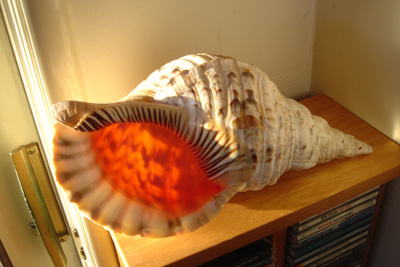
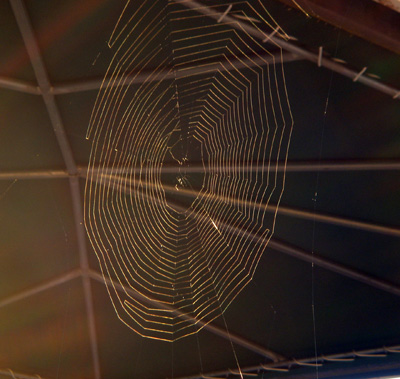
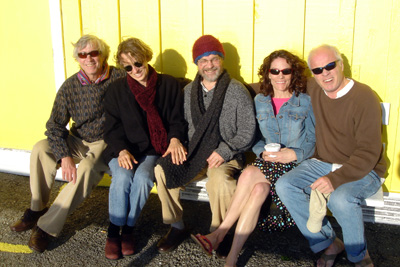
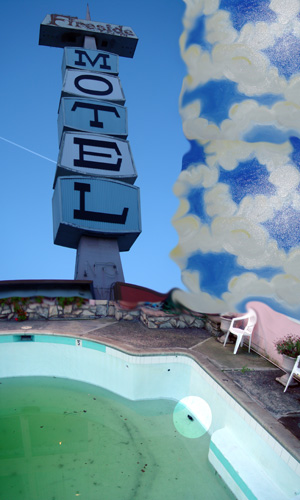
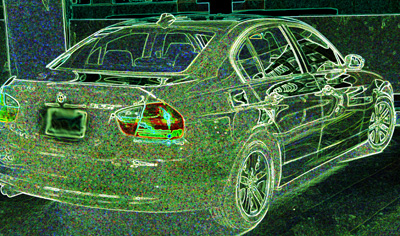
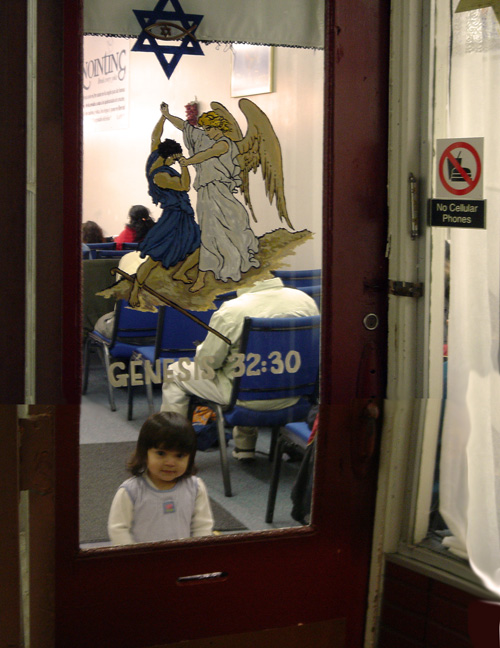
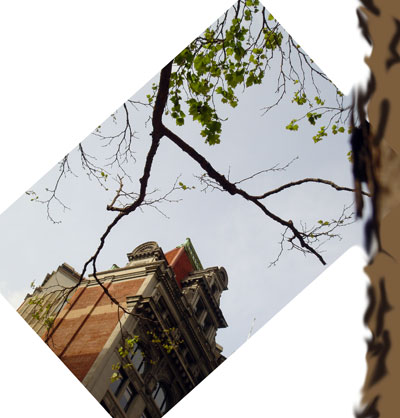
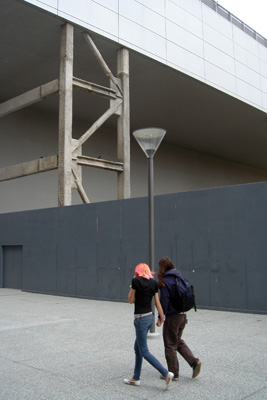
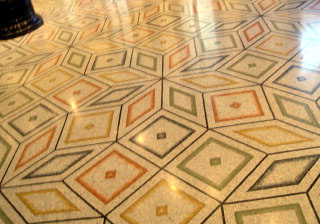
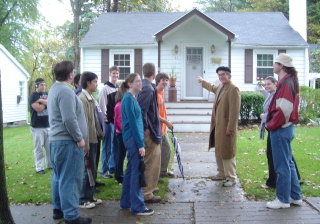
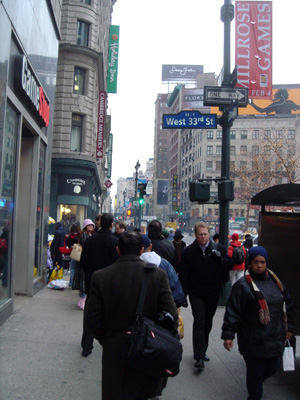
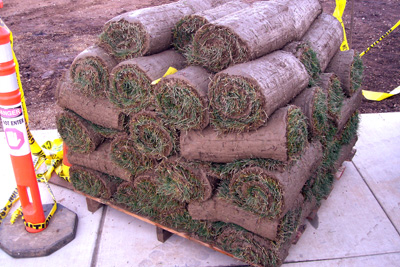
Today I was driving around the East Side of San Jose with Sylvia. And I took these pictures. Did I mention that last week in SF I saw a great show “Beyond Real” of Surrealist photos with, my favorite, a book of text and street photos called Banality, by Leon-Paul Fargue and Roger Parry. Any combination of words and images fits. (And, no, I'm not saying that any of these photographed objects are “banal.”)

Here’s my Borgesian (I’d like to imagine) imagining of a book of the same name, that is, Gerry Gurken's Banality appearing in today’s draft chunk of Postsingular

Gerry’s metanovel Banality was a vast combine of images all drawn from one and the same instant on a certain day. No time elapsed in this work, only space, and any hint of a story you might find was only in your imagination. Not to say this was a random data dump: the images were juxtaposed in a somewhat arbitrary order, each block or combine accompanied by written text or a spoken voice-over delivered by a virtual Gerry Gurken — who wandered this time-slice at the user’s side.
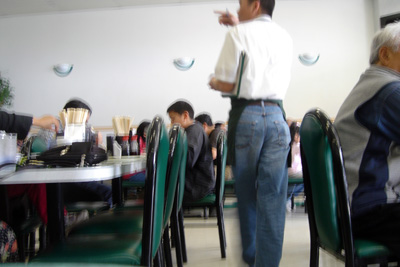
Gerry had taken his metanovel’s title, Banality, from a 1930 Surrealist book of juxtaposed text and street-photos, and the name had a particularly heavy resonance because the particular instant chosen was the moment known as Orphidnet Time-Zero, 12:00:00 noon PST on the first day after Orphid Night, this being the instant when the beezies had implemented their protocol of having the orphidnet save, once per second, the precise positions and velocities of every orphid on Earth. At this instant history had truly changed forever, and what did Gerry find there? Banality, although do remember that, being a Surrealist, he wasn't necessarily using the word in a negative sense … think, e.g., of Andy Warhol's love of the ordinary.

[Something rather surpising and unbanal: the Sikh temple in East San Jose. We went in, and three holymen were praying upstairs in little booths. Back to the novel excerpt…]

By the way, Gerry, who was a convivial and gregarious sort, preferred to find the images for Banality not by browsing in the old data base, but rather by roaming the streets. He had a good eye; he saw odd things everywhen and everywhere. Often as not, the beezies were able to scroll back from current sightings to find nearly the same image in that database record of Orphidnet Time-Zero, and when they weren’t, that was fine with Gerry too. For a confirmed Metadadaist, a cauliflower was as good as a catfish.
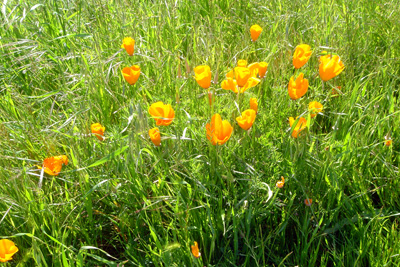
Banality was hundreds of hours long, and it grew longer every day; Gerry had no intention of every finishing it. Despite the dismissive remarks that Darlene sometimes made about the work, it was some kind of cockeyed masterpiece, for Gerry Gurken was a craftsman to the core. Any ten-minute block of Banality was fascinating, disorienting, revelatory, leaving the user’s mind off-center and agog — unfortunately, after that ten minutes, the work very quickly got to be too much.
Banality was like some bizarre, aggressively challenging sushi bar that the average person would desert forever once having tasted a single item: horse-clam siphon, manta-ray liver, live nudibranch, starfish spawn — “Thanks, very interesting, I have to go.” Slam.

Black Hole, Blowback, Postsingular Excerpt

Thursday, April 6th, 2006

Finally the rain stops for a day.

As Thuy works, she’s letting events impinge, maybe listening to music. I’m practicing being Thuy myself by walking and biking and driving around wearing my iPod. The continual soundtrack. It makes things seem cool and arty. But it also gets to be too much. I end up waiting for some songs to end. Wishing I could have some quiet. Feeling rushed.

Thuy can replay thought sequences. She can replay scenes and then tweak them with “what ifs”. That’s what I do when I’m writing, in fact. I layer on a few minutes a day. I re-experience the part that came before, re-dream it, getting a running jump.

Some force is guiding her, its a Rebel Angel called Azaroth. Azaroth is guiding Thuy so that her tangled plot will reproduce Chu's Knot, which is an interdimensional jump-code.

Something I’d like to express in describing Thuy writing the metanovel: When I’m in the zone on a novel, really flying, dreaming while awake, I sometimes find that my life is changing. I get a synchronistic sense that the world is pushing back, helping me, collaborating.

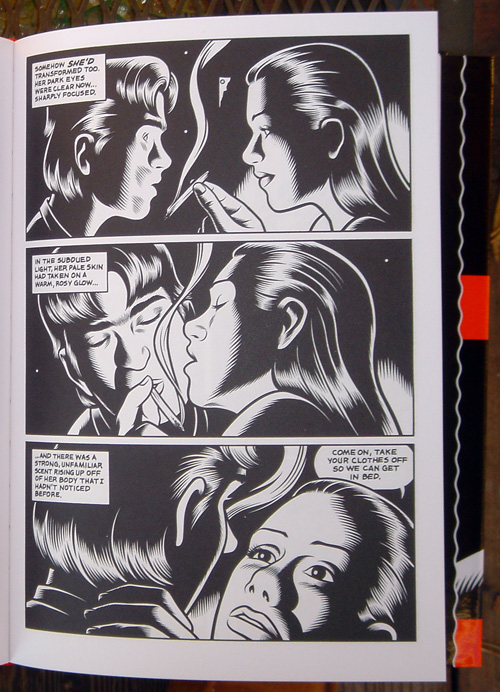
I read this great graphic novel, Black Hole, by Charles Burns. It gave me nightmares. What terrific line-control and chiaroscuro.

Here’s a bit of the Postsingular chapter I’m working on, Chapter 3: Thuy’s Metanovel.

[BEGIN NOVEL DRAFT QUOTE]

“Westinghouse yam in alleyway,” said the improbable virtual spambot, formed like a waist-high two-legged sweet potato with multitudinous ruby eyes, wreathed in crackling blue sparks, peering at Thuy from a rain-wet alley off Valencia Street, the same spot where Grandmaster Green Flash had died. “Vote for Dick Too Dibbs,” added the yam, once he’d caught Thuy’s attention.

“Dibbs already won,” said Thuy, not bothering to sic her filter dogs on the apparition. These days she enjoyed wandering the streets alone, open to the ether, playing the patterns, riding the flow. The heavier scenes went into her metanovel, which was growing at a rate two or three minutes per day.

You could measure a metanovel’s length in terms of how much access time a typical user took to finish the work, assuming they didn’t set it aside. Thuy’s target-length for Wheenk was eight hours, about the time it would take to read a medium-fat book.

“I like Dick,” said the virtual yam, falling into step next to her, the misty rain drifting through him. “Does Dick like ye?”

“Give it a rest,” said Thuy. “The election’s over, you slushed pighead. Bernard Lampton conceded.” The orphidnet was noisy with the thin cries and hoarse roars of celebrating marshmallow people. To drown them out, Thu had her favorite Tawny Krush symphony playing, and she was enhancing the sound with violin squawks triggered by smooth gestures of her arms and legs: all but dancing down the street…

…The yam sputtered, twinkled, and faded out ¬— leaving Thuy with a sudden suspicion that maybe that hadn’t been the true flesh-and-blood Prescription John running the yam, maybe it had been the procedurally-animated virtual Prescription John from within her “Losing My Head” metastory. Hanging around the Metotem store the other day, she’d heard some of the metanovelists talking about this not uncommon phenomenon, which they called blowback.

Gerry Gurkin, for instance, kept having visitations from the simulated Gerry Gurkin of his autobiographical Banality, the virtual Gerry clamoring that he wanted metanovelist Gerry to edit in a girlfriend character for him to f*ck. Telling this story, portly Gerry had been darting hot intense looks at Thuy, as if he were planning to feed a model of her to virtual Gerry, which was perfectly fine with Thuy, and she said so.

Thuy was a lonely-but-coned-off emotional state where she was ready to accept any admiration she was offered, as long as it was virtual and with no strings attached. Re. “coned off,” she’d heard a woman actually saying that about herself the other day, as if she were a wreck lane or a crime site. That phrase went straight into the metanovel. The yam’s, “I like Dick, but does Dick like ye?” seemed usable too. Oh, for sure that had been the real Prescription John, a beezie animation couldn’t sound that stupid.

[END NOVEL DRAFT QUOTE]

Riddling the Rebel Angel

Sunday, April 2nd, 2006

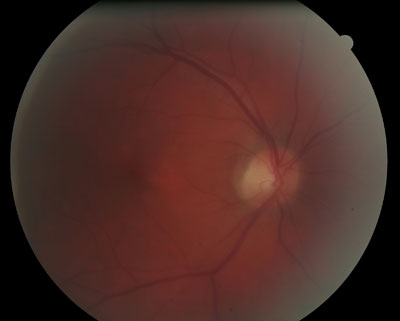
Busy last week. Went to get my eyes examined so I can relace the glasses I scratched with sand in Grand Turk. (That's my retina.) I’m getting glass lenses this time around, sick of replacing plastic.

I had computer problems. Learned something. If you have a pivoting Viewsonic monitor, don’t use the free image-rotating Pivot software that comes with it, use your graphic card’s built in ability to rotate the image. Much better image now.

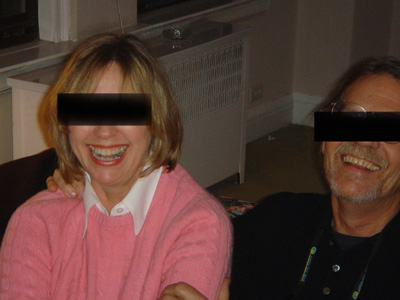
Saw some friends in Santa Cruz, including Michael Beeson and Jon Pearce.

A flock, school, herd — what’s the word? — of seals off the dock, mothers and children.

We walked past a somewhat scurvy motel that had a dead rat floating in the pool.

I ended up getting a BMW, it kicks ass.

Getting to work on (long) chapter two (of four) for Postsingular. Metalovelist Thuy’s point of view. I want to have a scene were Thuy walks into a “Rebel Angel Church on Valencia St.” And they chant and Rebel Angel Azaroth from the Mirrorbrane appears.

Initially I was thinking of lifting the Kamikaze chant from Pynchon’s Gravity’s Rainbow:

Hi wa Ri ni katazu,

Ri wa Ho ni katazu,

Ho wa Ken ni katazu,

Ken wa Ten ni katazu,

Ten wa Hi ni katazu,

Hi wa Ri ni katazu,

Ri wa Ho ni katazu…

“On and on, around and around. Searching in the orphidnet, Thuy found referents and meanings for the Japanese words, but the meanings didn’t matter, the meanings were bullshit, only the sounds mattered, like divine Aum vibrations bringing the Rebel Angel Azaroth into the room…”

But that seemed too derivative. So I looked up some riddles or lallagunut in Gaddang, a language of the Luzon Island Philippines.

Here are some good ones:

Riddle: Gongonan nu usin y amam; maggirawa pay sila y inam. (If you pull your daddy's penis; your mommy's vagina also screams). Answer: Campana (a bell).
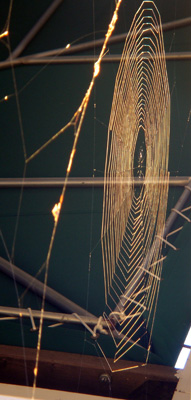
Riddle: Itannu si canayun; udde ammem maita-ita. (You stare at it often, yet you never have seen it.) Answer: Sinag (the sun).

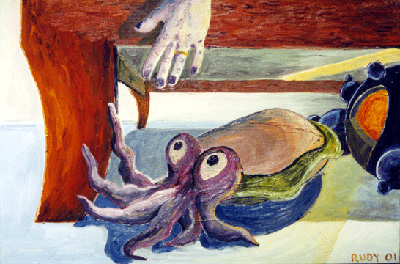
Riddle: Innacun cunna, gampamade nattoli. (If he says he goes, he means he comes.) Answer: Laddao (a shrimp). [For plot purposes, I think I’ll cheat and say the answer is “cuttlefish” or “squid.” (“Squid” is “pusit” in Tagalog and some other Filipino languages, although I’m not sure what it is in Gaddang.)]

Riddle: Ana tata tolay, accananna bagguina. (A person eating up his own body.) Answer: Candela (a candle).

How about using the candle/cuttlefish/sun lines for a chant, like

“Ana tata tolay, accananna bagguina;

Innacun cunna, gampamade nattoli;

Itannu si canayun; udde ammem maita-ita.”

He’s eating his own body;

When he turns away, he’s coming to you;

You stare at him, but you never see him;

I think it works better to just use cuttlefish/sun. I went by an actual storefront church on Valencia St. yesterday for atmosphere, here’s a current draft of the opener for the scene:

Thuy was digging the scene, eating her popcorn, and then Luis paused and stared right at her, drawing info from the orphidnet. He was a kiqqie, with beezies bedecking him like shelf-mushrooms on a forest-floor log. “Welcome, sister Thuy in back,” he called in his weirdly accented tenor. “Azaroth be with you. Chant with us, ay, I’m calling out the Rebel Angel Azaroth, ay, despised by the high lamas of the Mirrorbrane, guiding us to revolt against the dicky-ducks, a sword against the Pharisees, ay, our savior from the ravening Big Pig. Show us your face, Azaroth, caress us with your energies, ay, warm our hearts to heal this wounded world. Lead us in the invocation, Sister Kayla!”

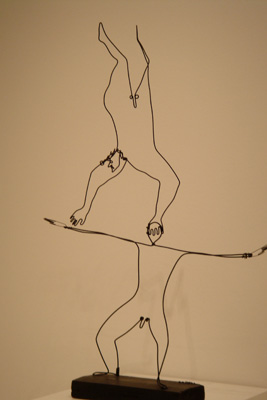
[Note, we were in SF yesterday and saw the Calder show at MOMA.]

Kayla was the woman running the popcorn machine. Smiling and pressing the hands of her fellow worshippers, she curvetted up the aisle, taking a second microphone from Luis and beginning a chant.

Innacun cunna gampamade nattoli.

Itannu si canayun udde ammem maita-ita.

On and on, Kayla and congregation repeated those same two lines, drawing out the sounds. Searching in the orphidnet, Thuy found the phrases to be couched not in Spanish, but in the Gaddang language of the Philippine island of Luzon, not all that far from good old Vietnam. Thuy’s grandparents had landed there when they’d fled Vietnam in a leaky boat. The two lines turned out to be folk riddles, meaning something like:

When he turns away he’s coming to you.

You stare at him but you never see him.

The answer to the second riddle was “the sun;” the answer to the first was “a cuttlefish.” The chanted words overlapped, divine Aum vibrations calling another order of being into the room. Everything was becoming so very deeply intertwingled.

Warm air eddied across Thuy’s neck, making the hairs stand up. Luis kicked aside the silk Persian rug to reveal an pattern inscribed on the floor, an octagon with a square drawn on the inner side of each edge — a beezie agent told Thuy the pattern was a flattened hypercube — and here came Azaroth, or the upper part of him anyway, the lower half of his ethereal form sticking down through the floor.

[I saw the famous twins in Union Square, nice to see them still out there shopping, they were already a fixture 20 years ago.]

Varieties of Metanovel

Monday, March 27th, 2006

Note the two corrections to my notes on the GDC, I misspelled Pekko Koskinen’s last name, and I mistakenly said the Strange Attractors team at Ominous Development Studios were students. I’ve been playing that game by the way, it’s soothing.

After I used iTunes for a few days it broke my install of Windows XP because I *gasp* dared to take out the iPod before the sluggish and vengeful Apple-ware gave me permission, and now my machine’s at the shop getting the operating system rebuilt. [Though maybe the machine probs are unrelated to iTunes, you never really do find out these things.] Anyway I do love my iPod. I’ll write more on it later. Changing my worldview. Since I’m machine weak, I’ll just recycle old pix today.

I'm wrestling with the question of what kind of novel people would write if they had postsingularity style mind amplification, helper agents, planetary ultra-wideband access for all, etc. Store it as a waking dream, as a VR, as a game? I call this a metanovel.

I’d like to get all Borgesian and Stan Lem-ish on this problem's ass. Think of a variety of oddball new ways to write a novel. (I consulted my Collected Stories by Borges already, but need to get hold of a copy of Lem’s A Perfect Vacuum (reviews of nonexistent books) for more inspiration.]

Metanovel design patterns:

Lifebox. A metanovel that feels like a person’s whole remembered life. The art of a lifebox novel is to tweak it so that the life is a bit more interesting than your own. A lifebox novel will normally be a temporal interval of a life, possibly the whole thing. You could artificially limit yourself to hovering near the main character (third person objective) instead of inhabiting them (first person), but the third person option doesn’t make that much sense.

Inventory. This is a way of organizing a Lifebox novel. Think of Charles Simmons’s book where he goes over his experiences with various ordinary kinds of things, like a water chapter, a frying-pan chapter, a vagina chapter, a freckles chapter. hats, tongues, bicycles, dogs, trees, drugs, food, cars, clothes, teaching, voice, fish, shit, wind, kites, airplanes…. Or instead of themes, you could organize the Lifebox around locations, like by telling everything that happened in each important location in your life.

Multithread. A metanovel that’s like a movie, but with complete mental records of everyone in it. Possibly have it really be like a movie, and have the offscreen records as well. Fake a lot of the internals on a need-to-know basis, like the way you could make an infinite VR by having the landscape be created on the fly.

Forker. A metanovel that includes all N to the Nth possible options. Jorge-Luis Borges hints at this notion in his story, “The Garden of Forking Paths.”

Reverse Forker. Jorge-Luis Borges discusses this story pattern in his tale, “A Survey of the Works of Herbert Quain,” describing an (imagined) book called April March by Quain. April March begins with a somewhat ambiguous scene of a man and a woman talking, and is followed by three versions of what happened to the man and woman the day before, each of which is followed by three versions of what happened the day before that.

Mirror. A factual account of a scene followed by a metanovel version of the scene, possibly followed by a further transformed version of the scene, possibly including the metanovelist imagining the metanovel version…

Props. A metanovel from the point of view of object or objects that are passed around; one thinks, in a melodramatic vein, of a gun or a treasure. Alain Robbe-Grillet got into this zone.

Hive. A metanovel in which the “characters” are groups of people.

Animal. P.O.V. of an animal. Doesn’t need to be meta, strictly speaking, I mean look at Call of the Wild. But having the orphidnet and the possible brain access could let you really get into an animal’s p.o.v. I’d love to fly or swim.

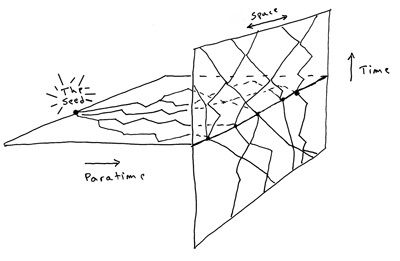
Timeslice. An exhaustive description of everything happening in a city or a smaller zone, the description limited to one instant of time.

Reveal. A metanovel detective story that proposes the wrong solution to the crime, but with loose ends that allow the user to in fact winkle out the correct answer. This is a Borges idea. Doesn’t really need to be a metanovel, but the meta might make it possible to make this work better.


Rudy's Blog is powered by WordPress