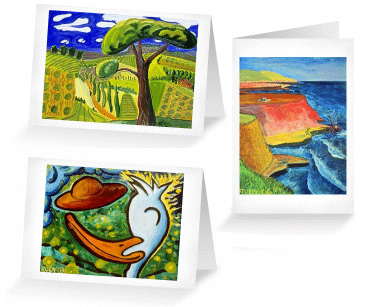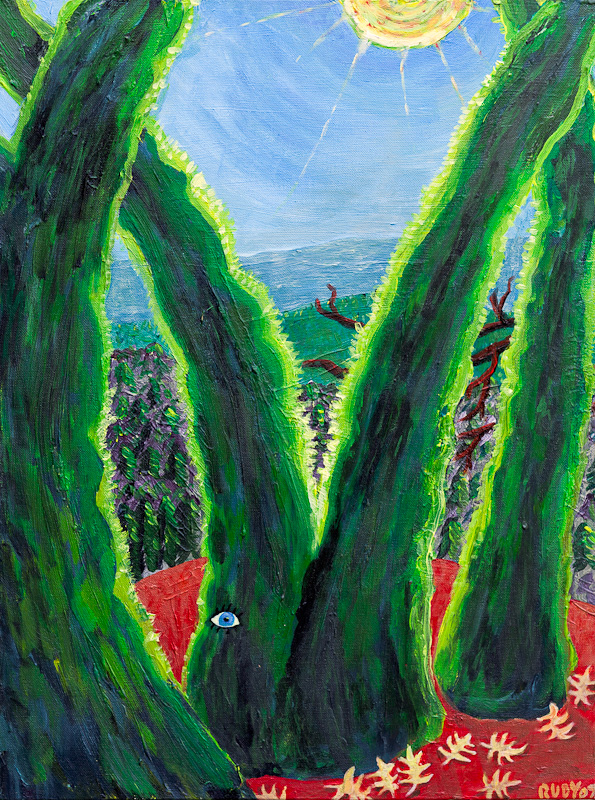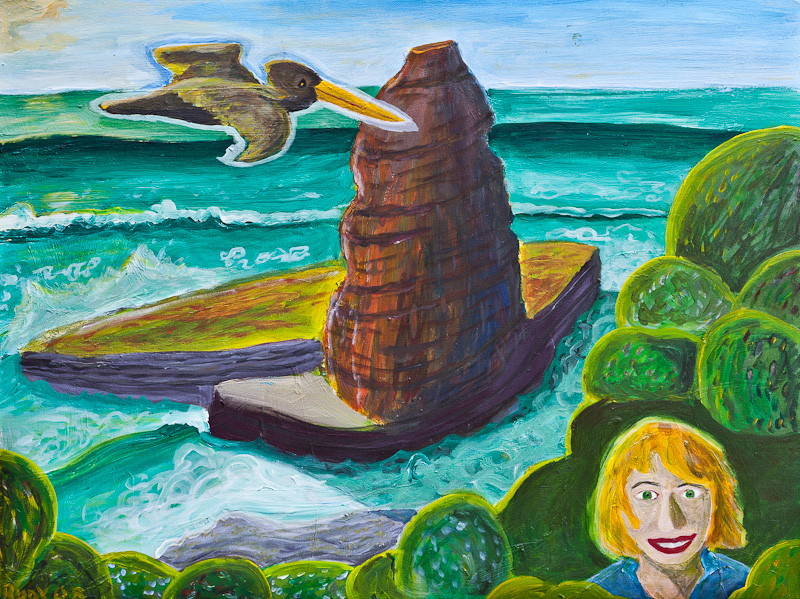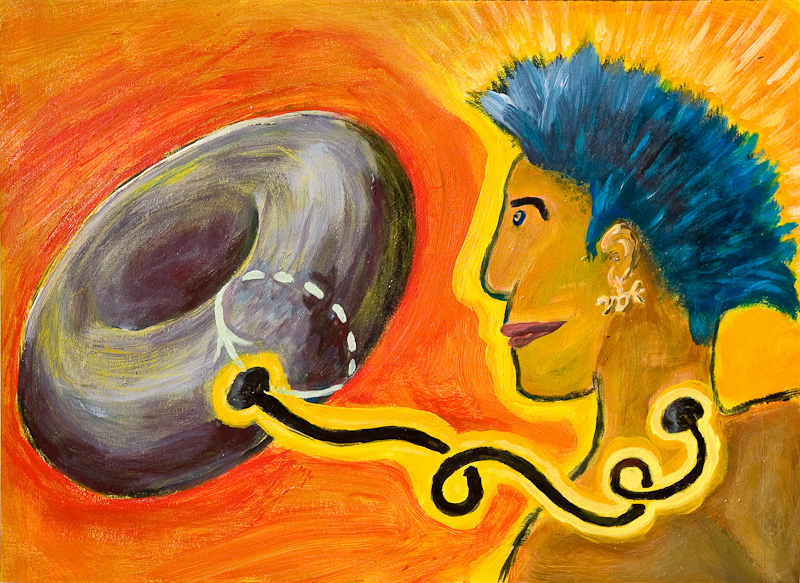






I finished another acrylic-on-canvas painting: Dawn, and posted it for printing at rudy.imagekind.com.
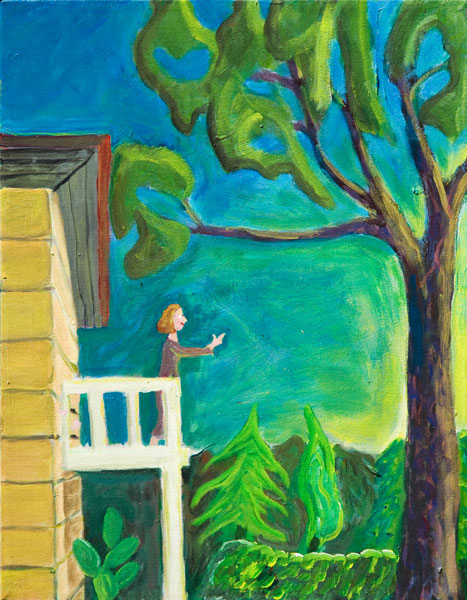
In the morning, the sun comes up behind our house and slants across the yard, coating the trees with warm light. My wife, Sylvia, calls it “the lamp,” as in “Is the lamp on yet?” This is a painting of her standing on the back porch greeting the dawn. I redid that tiny face about twenty times to get the right look, although it still doesn’t look like her, but it looks okay. We’re so highly tuned to recognizing faces that the tiniest smidgen of paint changes everything.
Some of you may recall that a couple of weeks ago, I blogged about my hassles in converting paintings into digital files that I use to sell prints.
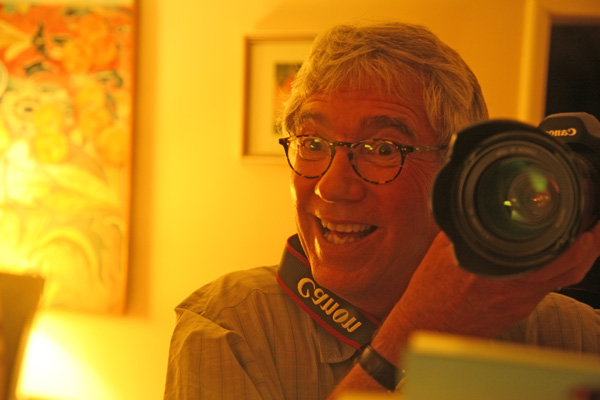
This weekend there was a good camera sale at San Jose Camera, and I went ahead and got a Canon EOS 5D in a kit with a nice zoom lens. I’m getting amazing detail, and great images of my paintings in seconds instead of in weeks.
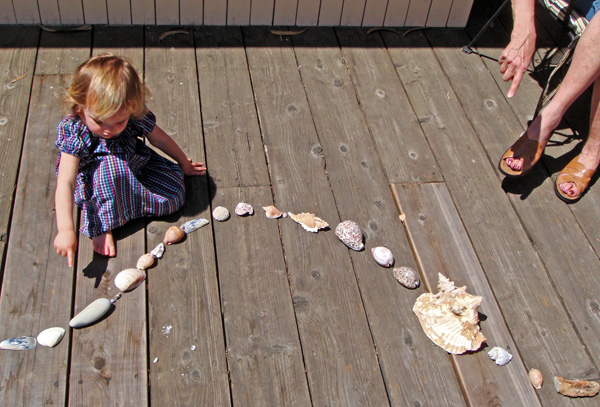
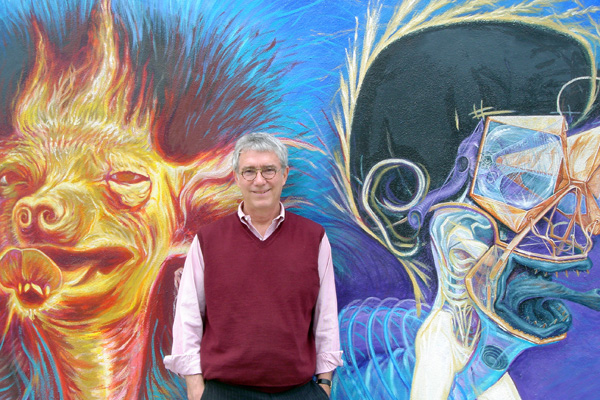
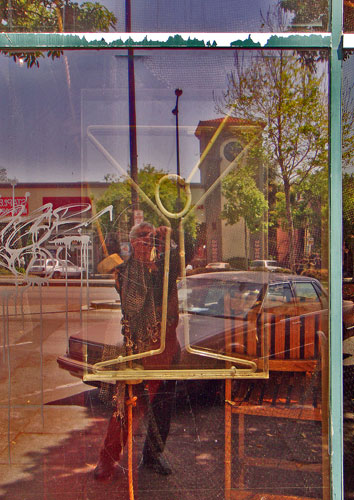
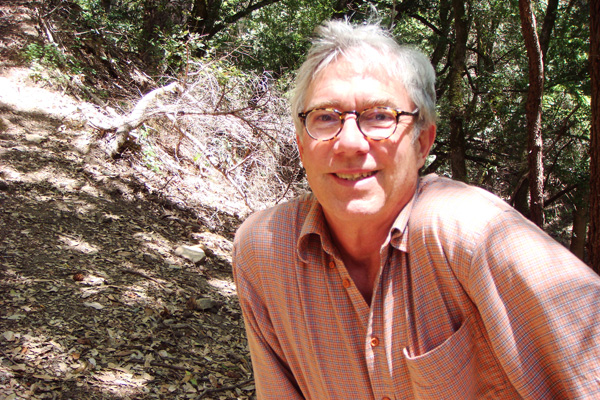
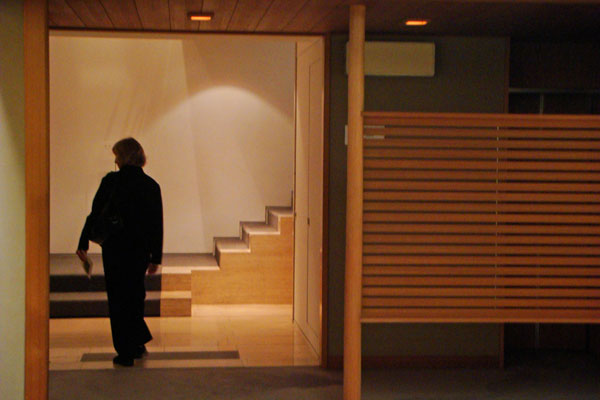
First of course, I did the traditional calibration shots of myself looking like an idiot in a dimly lit mirror, and of my feet with something ordinary.
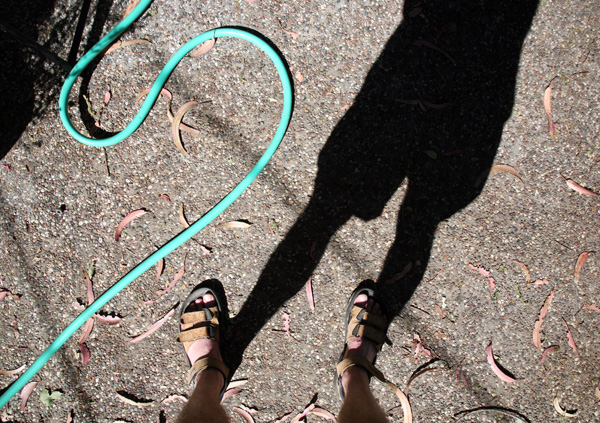
What makes a Canon 5D special is that (a) it costs several thousand dollars less than the top end pro cameras, but (b) it has a “full-frame” sensor.
Full-frame sensor means that CMOS chip that turns the light into pixels is big: the size of a 35 mm film frame. Most other cameras use much smaller sensor chips. In some ways, small chips are good, in that they don’t require such big lenses, so the cameras with them are small and light. But the full-frame sensor produces images with crisper details, better color, and less noise—basically because the individual “pixel sensors” are bigger and receive more photons. For details see this impassioned and even fanatical post by photog-maven Ken Rockwell .
My photographer nephew, Embry Rucker III, also recommended the 5D. Little Embry knows his stuff, he’s even shot portraits of Snoop Dog!

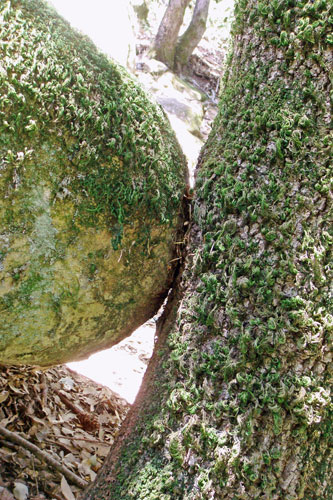
Talk about details! Here’s a picture of a cactus.

And here’s a detail cropped from that same file!
The 5D’s sensor is a “mere” 12 megapixels (twinge of meg envy), but the full-frame advantage makes those pixels really count. (Of course this fall, Canon will probably offer a 5D Mark II with 18 Megapixels, but that’ll cost a thousand more than what the original 5D currently sells for.)
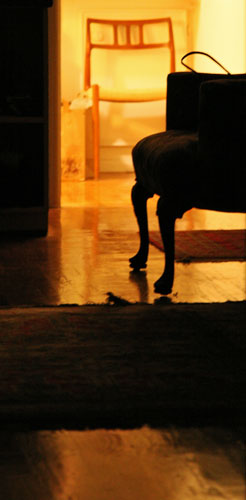
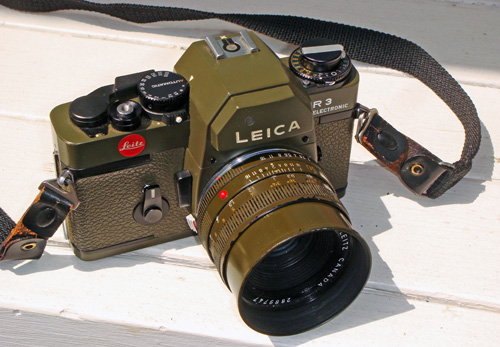
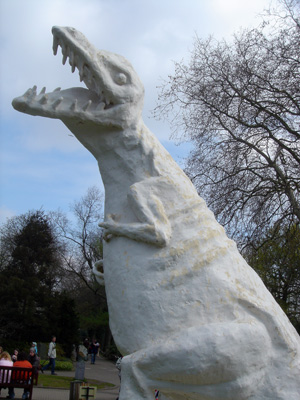
So I’ve been wandering around the house taking pictures of things. You can dial up the “film speed” fairly high and shoot reasonably well at night, not that the lens that came with the camera has a big aperture but, I’m planning to remedy that with a Hong Kong adapter ring so I can mount old wide-aperature Leica lens on it.
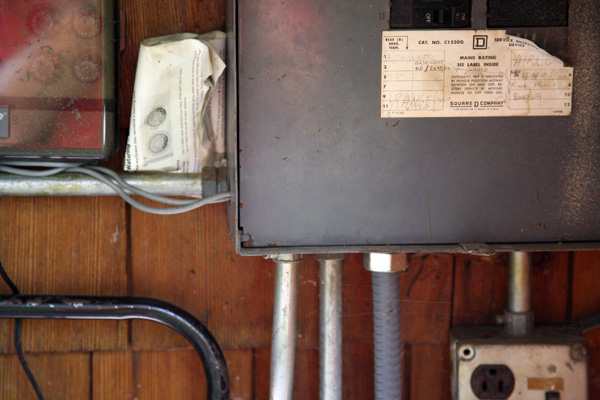
A fuse-box is a never-fail shot. Objective correlative of my brain.

This is the hammock rope that broke last year and sent me rolling down the slope.
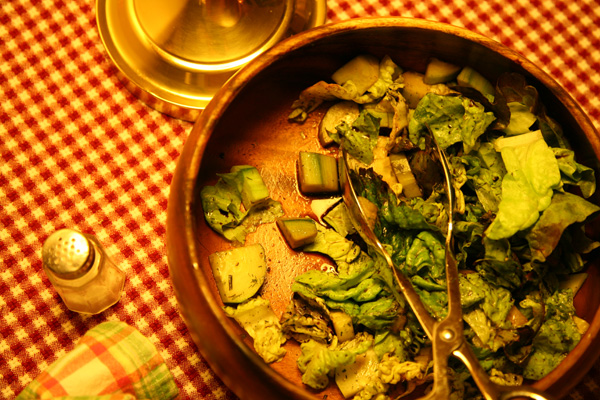
Hey, why not a picture of my leftover dinner salad? Wow. Those greens…

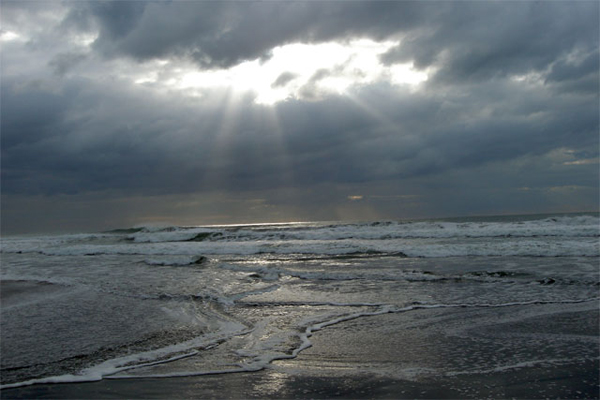
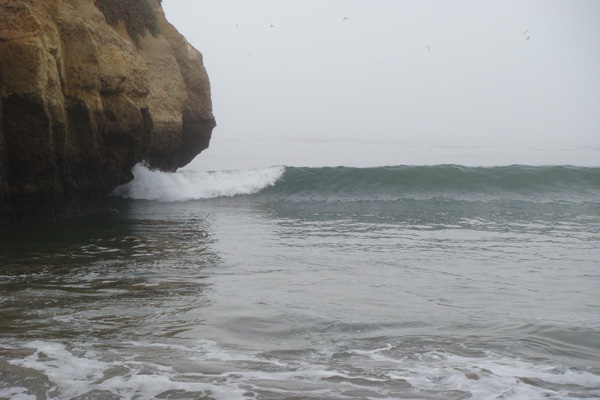
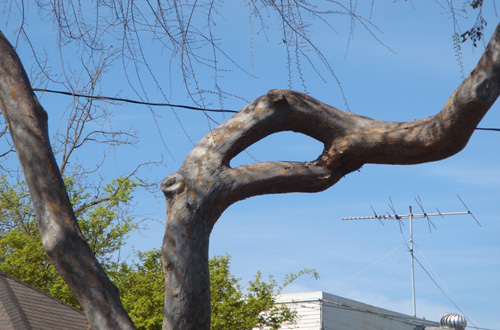
If all else fails, there’s always the sky.
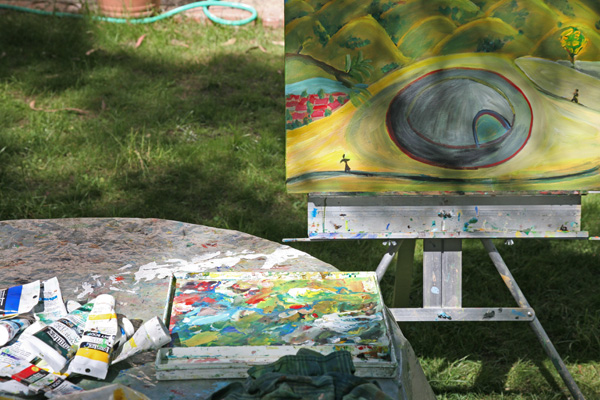
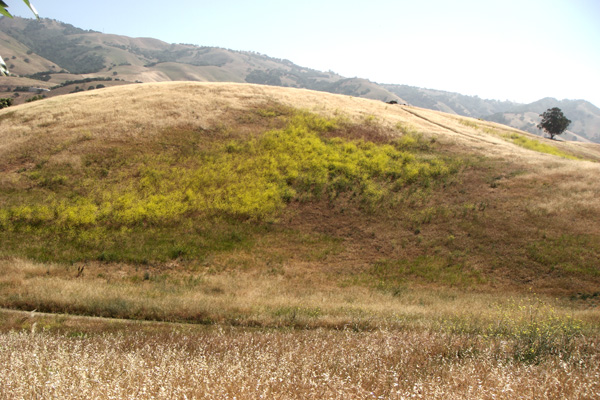
I’m getting started on my painting of Montgomery Hill, and working on a couple of short stories about the Big Splat that I’ve been posting about lately.
But today I’m going up to Google world headquarters to give a talk on Postsingular. I’m nervous. I’ll try and record it for podcast.
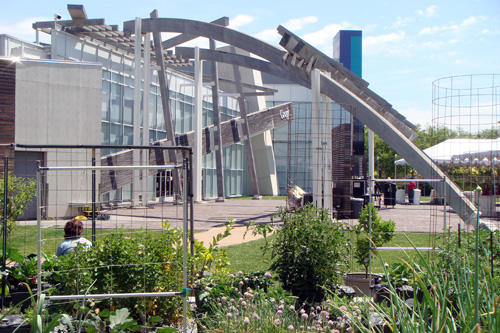
Okay, now I’m back home. I taped my talk and put it on Rudy Rucker Podcasts, the sound is pretty good, and eventually the video will be on Google video, I think. I also added a phone interview by an Australian guy who does a podcast called The Sci Phi show, with suboptimal sound. Click the button below to access the MP3 audio files.

I had a great lunch with Peter Norvig, an AI expert who’s now a Director of Research at Google. The Google cafeteria stands head and shoulders above the other hi-tech cafeterias I’ve sampled around here: Apple, Electronic Arts, and Adobe. And Norvig is an interesting guy, his site includes, for instance, the world’s longest palindrome. It was partly due to a suggestion by Norvig that I wrote my two stories about Alan Turing: “The Imitation Game” and “Tangiers Routines.”
I’d have to say that the talk itself didn’t go over all that well. It was one of those times when I feel like a twittering beetle who’s just crawled out of a flying saucer. I always imagine the rest of the world is keeping pace with my modes of thought, but by now I’ve dug myself awfully deep into the gnarl. Uneasy incomprehension was the order of the day.
And then a woman in the audience (not a reader of my work, I don’t think) accused me of being a sexist because I hadn’t mentioned the career occupations of my characters Nektar and Jil—and never mind that these formidable women are anything but Barbie dolls or submissive Stepford Wives! I’d like to think that, among male writers, I have stronger and more fully realized women characters than most, so it felt unfair.
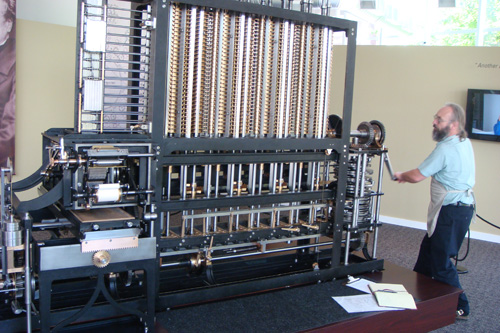
After the talk, I consoled myself by checking out Babbage’s Difference Engine, on display for one year only in the nearby Computer History Museum. There was a pleasant guy fiddling with it, trying to get it to work—it’s balky just now as a result from being flown here from England. I love the concept of turning a big crank to run your computer.