


Click covers for info. Copyright (C) Rudy Rucker 2021.


Author Archive

Revising “Spacetime Donuts”

Sunday, August 17th, 2008

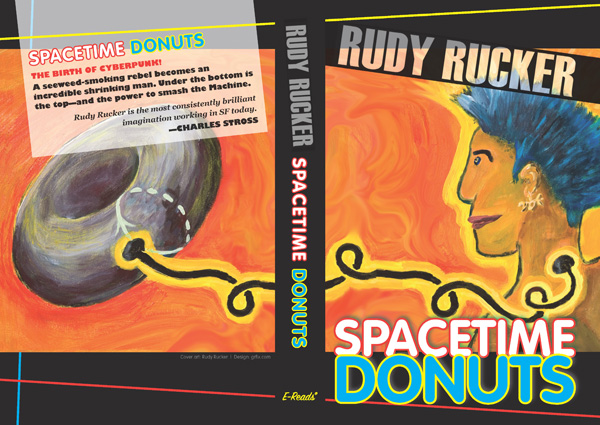
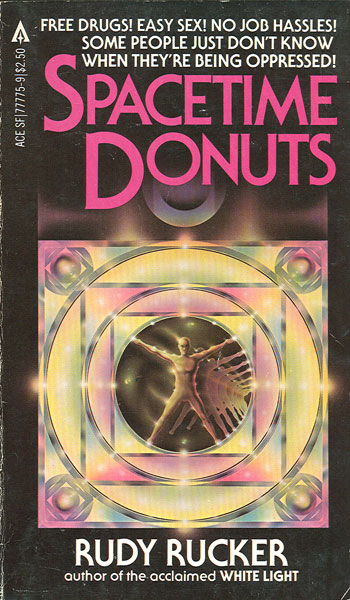
I’ve been busy doing some minor revisions on the manuscript for Spacetime Donuts , getting it ready for a planned E-Reads edition in electronic book and the print-on-demand formats this fall. I couldn’t resist cleaning up the manuscript a little. After all, I’m a writer, and revising novels is what I do.

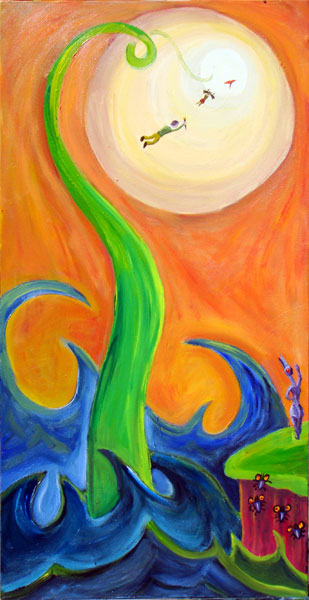
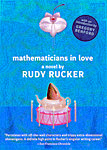
I made a painting for the cover, and my daughter Georgia Rucker turned it into a great cover design.

Although I do have a few new photos to show you, I haven’t been doing much writing, other than working on the Spacetime Donuts revision, so for today I’ll just paste in a more or less random excerpt from the text.

Suddenly they were through the electrons’ domain and the bare nucleus blazed ahead of them, perhaps half the size of the scale-ship. It was growing rapidly as they drifted towards it. A deep rumbling filled their tensegrity sphere, and the smell of sulfur and burnt earth filled their nostrils. Vernor was not surprised…if the quantum mechanical probability field could act directly on the memory structure of his brain to produce visual images, there was no reason it couldn’t produce the sounds and smells as well. Intellectually he was hardly surprised…but on the gut level he was as scared as he’d ever been.

The nucleus was a dusky red interspersed with patches of black and threads of glowing white. Its shape, although roughly spherical, was irregular and constantly changing. There was no doubt whatsoever in Vernor’s mind that it knew they were there, and was waiting for them to get close enough for it to make its move. He was repelled at the thought of being sucked into the heart of the fantastically dense entity ahead of them. But surely the Virtual Field would protect them?

A terrible idea struck Vernor. Although the Virtual Field would prevent the nucleus from physically touching them, the spherical symmetry of the VFG field might produce a lens effect…a lens magnifying and focusing the fantastically powerful nuclear strong forces upon the interior of the scale-ship. Of course the VFG field was acting as a lens, otherwise the intensity of the quantum probability field would have been too weak to affect their brains…“Mick!” Vernor screamed. “We’ve got to stop!” He fumbled for the controls with thumb-fingered hands.

“Stay cool,” Mick said reaching over Vernor’s shoulder to turn down the power control. They stopped shrinking, and the nucleus stopped growing. It seemed to be hovering fifty yards from them, a balefully glowing eye as large as the scale-ship. There was some kind of tension growing in the back of Vernor’s mind…

Suddenly Vernor’s hand shot out and turned the VFG field up to full. The impulse to turn the power up had come from his brain…but what had put it there? The nucleus filled his mind as he clung to the controls, fending off Turner’s efforts to turn the field back down.

The laboring VFG cones whined shrilly, and in seconds the scale-ship was a twentieth the size of the huge atomic nucleus looming ahead. The rumbling and the stench grew more intense, and suddenly a chain of sparks shot out from the nucleus and enveloped the scale-ship, inside and out.

“Message Found in a Gravity Wave”

Tuesday, August 12th, 2008

Back in May, 2008, I was posting about the so-called Cyclic Universe theory, and about three SF stories I was writing on this theme.

My first cyclic universe story, “Message Found in a Gravity Wave,” is in the current issue of Nature Physics, and you can read it online.

Working with Bruce Sterling, I recently co-authored a second story on this theme, “Colliding Branes.” We’ve sold it to Asimov’s SF Magazine; I’ll let you know when it comes out. And I’m currently co-authoring a third story involving these ideas with Paul Di Filippo, under the working title “To See Infinity Bare.”

Questionable Taste

Sunday, August 10th, 2008

Every day I mess around with my writing a little—journal, novel notes, stories, blog. Or maybe I paint. Writing keeps me going. It helps me wake up, helps me center.

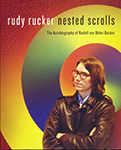
As regular readers of my blog know, one thing I’m working on these days is outline notes for a transreal novel with the current title Nested Scrolls. It’s about a writer who’s trying to get it together in a world teeming with aliens. My life in a nutshell.

I enjoy my complex, layered, recursive, misleading ways of coping with reality and processing information. My mind is like an anthill, carting each twig of experience into this or that midden heap. If I can think of myself as a character in a transreal novel, then my life becomes more bearable, more mythic, less raw. Also it’s a good way of amusing myself: a way to put reality in quotes, a way to handle life with pot-holders.

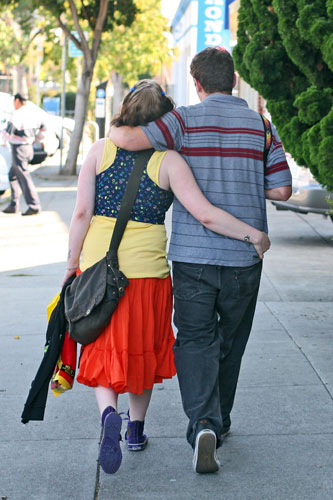
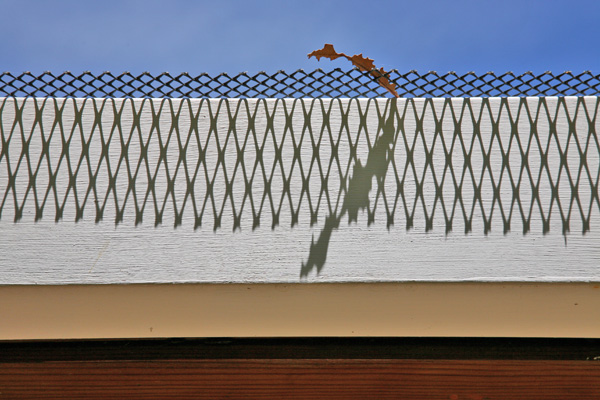
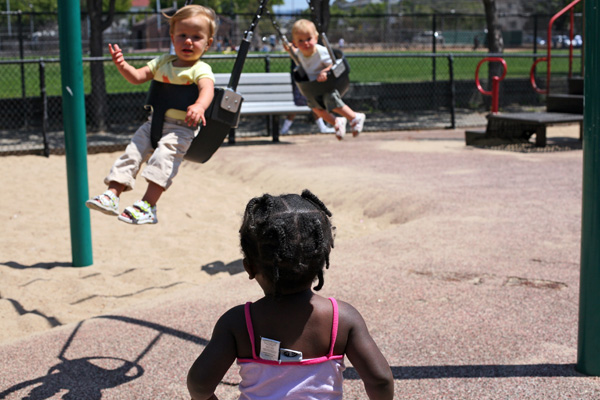
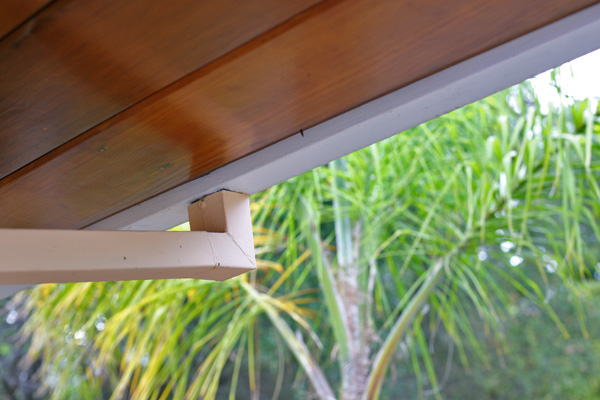
I’ve also been busily taking photos of, basically, nothing. Just things around my yard or house, or sights in the streets of Berkeley. Only rarely do I manage to shoot a somewhat journalistic picture of people, as in the playground scene above. I’ve always wished I could do that more, but I’m too shy to do it a lot. Instead I pick out color and light patterns or narrative nodes of meaning. Like the gutter reflected in the shiny veneer below.

The scanned and OCR-ed versions of Spacetime Donuts and The Sex Sphere arrived last week, and now I’m proofing them for the planned E-Reads editions (they’ll be available in both the electronic book and the print-on-demand formats). The scans are very clean. Optical-character-recognition tech has really improved.

Content-wise, I’m not planning to undertake any major editing. I mean—I started writing Spacetime Donuts in, like, 1976. That was thirty-two years ago, back when Nelson Rockefeller roamed the earth and the Rolling Stones were youth gods. Obviously, I wouldn’t write these books exactly the same way anymore. But other than that, I hope to let them be. Like time capsules.

This said, I am finding a few little things that I want to tweak, such as grammar glitches or using the same word too often in a paragraph. Call it art-historical restoration. And then there’s the dodgy matter of my questionable taste. I’ve always had this impulse to try and be outrageous, and back then I was fairly punk about it, not that I knew that use of the word “punk” in 1976. But I’m thinking I might sand down a couple of rougher spots…I’ll decide about this after I’ve read the whole book through.

It’s odd, reading this blast from the past. At the start, Spacetime Donuts feels like some half-finished, experimental spacetime hopper lifting off—I definitely hear clunks and rattles. I was still learning to write, after all. But then it settles in for a smooth cruise through the subdimensions. And, yay, the budding cyberpunk characters bring down the government!

Stay tuned.

Imagining Jim Oster for “Nested Scrolls”

Thursday, August 7th, 2008

Right after his attack, my new novel’s character, Jim Oster, is thinking about sex a lot. Like—sex is one of the very first facts about the world that comes back to him. Zero and one, as it were. He feels a little surprised about reproduction—he can hardly believe the details. His woman friend, Anne Wowesse, says he’s like an id with no ego or superego.

In the first mornings, he sits on the hospital patio with his IV-drip and looks at the clouds in the sky. They drift along, changing shapes, with the golden sunlight on them. The leaves of a potted palm tree rock chaotically in the gentle airs, the fronds are clearly outlined against the marbled blue and white heavens.

Most of the other convalescents fail to notice their natural surroundings, but, be that as it may, the information is coming in from outside Jim. He’s not creating it. And now Jim is struck by the realization that the world will go on without him after he dies.

Or…? He thinks of the participant/observer maxim in quantum mechanics: “No phenomenon is real until it’s observed.” He begins to wonder—or even to hope—that some aspect of reality depends on being seen by Jim Oster. He is, after all, a bit of a writer, and he sometimes imagines that his journals and blog posts are altering reality.

Looking up at the clouds from the couch in his back yard, he sees a high-flying bird—a crane or a gull. Mentally reaching out to contact the fowl he feels he can see through her mind, feeling the rhythm of her wingbeats, enjoying the vast expanse of her view, with the coastline and the Pacific ocean visible. Jim imagines that bird sends him a telepathic message: “Thank you.” She’s grateful to Jim for making her real by seeing her.

But—naaw—if Jim were dead, the birds would still be flying, the Earth would be turning, and the sun would be rising in the sky just the same. He’s of no more lasting significance than a dead leaf scuttering across the patio. He finds this fact to be somehow horrible.

Jim doesn’t feel like his old self. He feels like his mind is a giant warehouse where an earthquake knocked everything off the racks, and he has to reshelve things one by one. “Oh, yes, that’s a steam shovel, that’s a potty, that’s a quartz crystal, that’s my first day of nursery school.” Repeatedly he remembers marrying Anne Wowesse, and how cute she was in her white hat and veil. Repeatedly he remembers that he never married Anne Wowesse at all.

The days and weeks fly by. He doesn’t understand how he used to pass his time. He’s continually ransacking his bookshelves, looking for some old volume to reread. He spends much of his time waiting to go back to sleep. Each day he looks forward to bed time at nine p.m. sharp. And he naps every day. He wants to act normal; when he greets people, he forms his mouth into a smile, as deliberately and artificially as if he were making an “okay” hand-sign. He feels he’s living a lie.

When Jim stares at a neutral-colored object such as the 1940s frosted-glass light fixture on the ceiling in his rented house, he seems to see the tint of the object change in slow waves. Faint pastel hues amp up and down, as if some unseen force were diddling the world’s color balance sliders.

Smells seem much more intense, the odors of drains, of garbage, and of fruit. The meaty, oily scent of the decaying skin fragments in his electric razor is almost unbearable. He’s tempted to stop shaving.

Is the change because he quit smoking after his attack? Or has something been reconfigured in his brain? Maybe there’s a piece of him gone missing. His once-powerful spiritual impulses are weak, and, in a possibly related change, he’s no longer goaded by the impulse to get high.

Slouched on a the lawn chair in his back yard one afternoon, Jim falls into a trance while studying the clouds. When he comes back to focusing on his immediate surroundings, he realizes that he hears the low tapping of fingers on a keyboard. He tries to maintain a calm appearance, but inwardly he panics, thinking that he’s inside a computer program or a video game.

But, whew, it’s just his daughter sitting in a chair behind his head, checking her email on her laptop. He twists his neck so he can look at her, to talk this over. And then he remembers that he doesn’t have a daughter. There’s nobody in the chair. Or, no, wait, he does have a daughter, and she’s visiting him, yeah. She is sitting there after all. Her name is—what?

Is Jim Oster losing it?


Rudy's Blog is powered by WordPress